


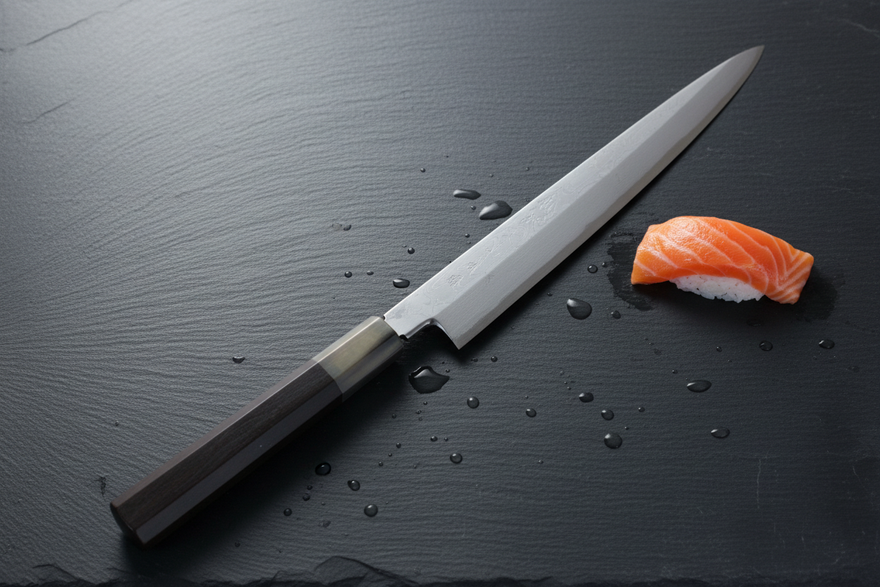
If you are researching a sushi knife, you are usually trying to answer a practical question: which blade do you need for clean sashimi slices, accurate fish portioning, and better control in Japanese cuisine? The answer is not always one knife. In traditional Japanese kitchens, cooks often pair a yanagiba for slicing with a deba for fish butchery and a ko-deba for finer prep.
That is why it helps to start with a complete knife guide before you narrow your choice. Japanese Chefs Knife works from Seki City, Gifu Prefecture. Koki Iwahara and JCK’s over decades in Japanese knife export add useful context. As a result, the guidance stays grounded in what these blades actually do and what they ask from the user.
If you want a broader vocabulary for blade styles and grinds, see the guide to japanese knife terms. It helps when you compare traditional single-bevel knives.
What a Sushi Knife Really Includes
People often use sushi knife as a broad search term. In traditional Japanese knife terminology, though, it can point to more than one blade style. The best-known example is the yanagiba. This long, narrow, single-bevel knife makes smooth draw cuts through boneless fish. If you focus on sashimi, nigiri toppings, or skinless fillets, this is usually the first knife to consider.
Sushi prep often starts before the slicing stage. A deba handles whole fish breakdown, plus head and collar work. It is a thicker, heavier single-bevel knife built for controlled fish butchery. A ko-deba follows the same idea in a smaller format, so it suits smaller fish and tighter work. Readers who want more context should also see this specialty knives guide.
For most buyers, the real question is not “Which is the best sushi knife?” Instead, ask which knife fits the stage of fish prep you actually do. Steel, blade length, bevel geometry, and maintenance all matter.
Key Features of a Sushi Knife
The first point is blade geometry. Many traditional sushi and sashimi knives use a single-bevel grind. One side carries the edge, while the other side has a slight concave hollow, known as the ura-suki. This hollow reduces the contact area on the back side, supports precise sharpening on the ura, and contributes to the clean cutting behavior expected from a single-bevel knife. However, it also makes the knife more specialized. Because of the single-bevel geometry, the blade may naturally steer to one side during the cut if the user’s technique is still developing. This is a characteristic of single-bevel knives, not a quality issue. In addition, you need the correct right- or left-handed version.
The second point is steel. Many experienced users choose Blue steel No.2 (Aogami No.2) because it takes a fine edge and responds well on the stone. White steel No.2 (Shirogami No.2) also earns respect for its pure carbon feel and keen edge. Gingami No.3 offers a stainless option, so it suits buyers who want traditional geometry with greater corrosion resistance. Carbon steel rewards careful maintenance. Therefore, you need to wipe it dry promptly and watch for reactivity and rust.
The third point is length. Yanagiba commonly runs from 240mm upward. Longer blades support the long drawing cut used in sashimi work. By comparison, deba and ko-deba stay shorter because they focus on controlled fish fabrication, not long slicing strokes. If you are comparing slicers in more detail, this yanagiba knife guide is a useful companion.
The fourth point is hardness and correct use. Traditional Japanese knives often reach hardness levels that support very fine edges, frequently around HRC 60 and above depending on the maker and steel. Higher hardness improves edge stability and retention in precise slicing work. However, these knives are designed for specific tasks. In most cases, chipping comes from misuse, such as twisting through bone, cutting frozen food, or using the knife on hard surfaces it was not intended for. Used correctly, these are exceptionally durable and reliable tools.
Sushi Knife Variations and Regional Names

Here’s the thing: “sushi knife” and “sashimi knife” are convenient search terms, but traditional use includes several slicer patterns, not only the standard yanagiba. The yanagiba remains the most common reference because chefs widely associate it with sashimi work. Still, regional tradition and kitchen workflow can shape which long slicer a chef prefers.
One well-known regional form is the takobiki. Chefs often connect it with the Kanto region, and it usually has a straighter edge with a squared-off tip. In practice, that tip can feel safer and more controlled in tight spaces. The straighter profile can also suit certain cutting styles and board setups. Even so, it is still a long, single-bevel slicer for clean draw cuts, not a general-purpose knife.
Another name you may see is Kiritsuke Yanagiba. This variation has a more pointed tip profile. As a result, it can help when you want more precision at the start of a cut or when trimming and portioning sit close to the slicing work. Tip shape preferences often come from presentation habits as much as from raw performance.
You may also see sakimaru-style slicers, which often have a dramatic, sword-like tip. Many buyers choose them for visual appeal and for the feel of the forward blade section in delicate slicing. Importantly, the core goal stays the same across all these patterns. A long, sharp edge should pass through fish with low pressure and preserve texture and appearance through a controlled draw cut.
Sushi Knife Product Evaluation: Verified Picks
Below are verified examples that show the main paths a sushi knife buyer can take, from fish breakdown to final sashimi slicing.
Sushi knife options for sashimi slicing
Fu-Rin-Ka-Zan Hon Kasumi Series Blue Steel No.2 Yanagiba (240mm to 300mm, 3 sizes) sits in the classic sashimi lane. Priced from $255 to $310, it suits buyers who want a traditional carbon steel yanagiba sushi knife. Many experienced users value its sharpening feel and edge character. However, Blue steel No.2 asks for careful wiping and drying during service.
Fu-Rin-Ka-Zan Hon Kasumi Series Gingami No.3 Yanagiba (240mm to 300mm, 3 sizes) fills the same role in stainless, priced from $295 to $350. For many home cooks and busy professionals, this is one of the most practical ways into a Japanese sushi knife. Gingami No.3 gives you traditional single-bevel use with less rust anxiety than carbon steel.
Masamoto KS Series Hon Kasumi White Steel No.2 Yanagiba (210mm to 330mm, 5 sizes) ranges from $395 to $665. Masamoto carries a well-established reputation in Japan for quality and craftsmanship, and this series reflects that. White steel No.2 has long been prized for its fine edge potential and direct sharpening response. The broader size range also helps cooks who already know whether they want a shorter home-friendly yanagiba or a longer professional slicer.
Available lengths from 210mm to 330mm in yanagiba make it easier to match home or professional use. Based on customer experience at Japanese Chefs Knife, the 270mm yanagiba is the most popular size among our buyers and is also a preferred choice among professional sushi chefs. It offers enough blade length for clean, uninterrupted draw cuts while remaining manageable in most kitchen settings. This makes it a strong reference point when choosing your first yanagiba size.
Sushi knife choices for fish breakdown
For fish breakdown, Fu-Rin-Ka-Zan Hon Kasumi Series Blue Steel No.2 Deba (Hon Deba, 165mm and 180mm) is priced from $300 to $330. This is not the knife for final sashimi cuts. Instead, choose it if your sushi prep starts with whole fish and you need the weight and geometry for that work. A deba is built for fish butchery, including removing heads and working around fish bones, but it should not be treated like a Western meat cleaver or used on hard animal bones. Blue steel No.2 gives it a traditional carbon steel profile, along with the expected maintenance demands.
Matching deba size to your fish is one of the most practical decisions you can make. As a general guide: a 105mm to 135mm deba suits fish around 10cm to 15cm; a 150mm deba works well for fish around 15cm to 20cm; a 165mm deba covers fish from 20cm to 40cm; and a 180mm deba is suited for fish 50cm and above. Choose based on the fish you actually cook most often.
Fu-Rin-Ka-Zan Hon Kasumi Series Gingami No.3 Deba (Hon Deba, 165mm and 195mm, 3 Sizes), priced from $315 to $410, serves the same core purpose with stainless practicality. If you work in humid conditions, prep in longer sessions, or simply want less concern about staining during fish butchery, this version can be easier to live with.
Smaller fish work may call for a ko-deba. Fu-Rin-Ka-Zan Hon Kasumi Series Blue Steel No.2 FB-22S Ko-Deba 105mm (4.1 Inch) is priced at $210, while Fu-Rin-Ka-Zan Hon Kasumi Series Gingami No.3 FG-23 Ko-Deba 105mm (4.1 Inch) is priced at $250. These examples show why a sushi chef knife set idea often works better as a workflow. In practice, you may need a heavier fish knife for prep and a longer slicer for presentation, not a boxed Western-style set.
If you are comparing bundles more broadly, the starter knife set guide explains how to think about useful combinations.
Pros and Cons of a Sushi Knife
Strengths
- Traditional single-bevel geometry is designed for extremely clean fish slicing, especially with yanagiba patterns.
- Verified options include both carbon steels and stainless Gingami No.3, giving buyers a realistic maintenance choice.
- Available lengths from 210mm to 330mm in yanagiba make it easier to match home or professional use.
- Deba and ko-deba options support a full Japanese fish-prep workflow rather than just final slicing.
- Left- and right-handed variants are available on these traditional-style listings, which matters for single-bevel usability.
Considerations
- Single-bevel knives require more technique than typical double-bevel chef’s knives and may not suit every beginner.
- Carbon steel choices such as blue steel No.2 and white steel No.2 need more careful drying and rust prevention.
- Deba knives are specialized and should not be treated like all-purpose kitchen knives.
- Harder traditional steels can chip if used on bone improperly, twisted through cuts, or used on frozen ingredients.
Who a Sushi Knife Suits Best

A yanagiba sushi knife usually fits the buyer who wants presentation-grade slices of boneless fish and sushi toppings. For most home cooks who make sashimi from time to time, a stainless Gingami No.3 yanagiba can be the easier place to start. If you already sharpen your own knives and enjoy carbon steel feedback on the stone, Blue steel No.2 or White steel No.2 can be very appealing.
Deba and ko-deba suit a narrower group. They make sense if you regularly break down whole fish or smaller fish at home, or if you want a more traditional Japanese prep workflow. If your fish usually arrives boneless and portioned, they add less value.
Where to Start With a Sushi Knife at Japanese Chefs Knife

If you are ready to compare authentic sushi and sashimi knives more closely, Japanese Chefs Knife is a strong place to continue. The selection reflects real Japanese blade traditions rather than generic “sushi knife set” marketing. The store operates from Seki City, Gifu Prefecture, and decades of knife export experience mean buyers get useful context on single-bevel knives, handedness, and steel selection.
For many buyers, the best starting point is simple. Compare a yanagiba for slicing first. Then add a deba or ko-deba only if your prep includes whole fish. Explore the range at Japanese Chefs Knife and use the verified product pages to compare blade type, steel, and size. Worldwide shipping also makes these traditional Japanese knives accessible beyond Japan.
How to Choose the Right Sushi Knife
1. Start with the task, not the keyword. If you only need to slice sashimi, focus on yanagiba. If you break down whole fish, add a deba to the picture. If your fish work is smaller and more delicate, a ko-deba may be enough. Many buyers search for the best sushi knife set when they really need one main slicer and maybe one prep knife.
2. Decide how much maintenance you will really do. Carbon steel sushi knife options like Blue steel No.2 and White steel No.2 can deliver a very traditional sharpening and cutting feel. They also demand prompt wiping, full drying, and attentive storage. By contrast, stainless Gingami No.3 makes sense if you want traditional Japanese geometry with less reactivity.
3. Match blade length to your workspace and ingredients. The 270mm yanagiba is the most popular size at Japanese Chefs Knife and a preferred choice among professional sushi chefs. A 240mm is often approachable in home kitchens, while 300mm suits professional settings with larger fillets. With deba, match the size to the fish you cook most often using the size guide above.
4. Respect the skill requirement of single-bevel knives. These knives can be superb tools, but they are not always beginner tools. Sharpening differs from double-bevel maintenance. Poor technique can cause steering, and handedness matters. If you commit to learning, the rewards can be substantial. If not, a more general knife may be the better first step.
5. Buy for long-term use. A traditional Japanese sushi knife is usually a considered purchase, not an impulse accessory. Pay attention to steel, length, handedness, and intended use first. Then read price in context. A knife at $255 and one at $665 may both be right for different users, depending on workflow, sharpening confidence, and frequency of use.
How to Use a Sushi Knife for Clean Sashimi Slices
Start by stabilizing the fish so it does not shift. Set the heel of the blade where you want the cut to begin. Next, draw the knife toward you in one smooth motion while keeping the angle and path consistent. Try not to press down hard. Let sharpness and length do the work. If you need to force the knife, the edge may need attention, or your cutting line may need adjustment.
Many people overlook how much single-bevel knives reward calm, controlled movement. Avoid twisting the blade during the cut. Also avoid lateral prying when you separate slices. Very hard Japanese steels can chip if you add sideways force at the edge, especially on a thin slicer. Use a suitable cutting board that is not overly hard, and do not use a yanagiba on frozen foods or bones. A yanagiba is a finishing knife for boneless fish, and it performs best when you keep it in that lane.
Sharpening and Maintenance Notes for Single-Bevel Sushi Knives
When you maintain a single-bevel sushi knife, you maintain a geometry, not just an edge. A typical double-bevel knife gets sharpened on both sides to form the edge. With single-bevel knives like yanagiba and deba, you do most of the sharpening on the large beveled side. Then you treat the back side carefully to manage the edge and reduce sticking without changing the intended shape.
Sushi knife sharpening basics
Think of it this way: your goal is to keep the primary bevel even and stable over time. Light, consistent sharpening is usually easier than waiting until the knife gets very dull. Heavy material removal can change how the blade tracks and releases food. Deburring also needs extra attention with single-bevel knives because the burr can grow larger, and the edge reacts quickly to uneven pressure. If you are new to this, take a conservative approach. Focus on repeatable technique instead of chasing an extremely aggressive edge right away.
Daily sushi knife care and storage
Daily care matters just as much as stone work. Carbon steel options, including Blue steel No.2 and White steel No.2, should be wiped during prep. Then rinse and dry them promptly. Many users keep a clean towel at the station and treat wiping as part of the workflow, especially in humid kitchens or around acidic ingredients. Gingami No.3 is stainless and usually less reactive, but it still needs proper cleaning and drying. Stainless lowers rust anxiety; it does not remove the need for basic hygiene and storage habits.
If you notice small chips, the cause is usually hard contact, twisting, or misuse on the board or ingredient. Do not panic. Small chips can often be reduced through careful sharpening over time. However, a heavily chipped edge or a rounded, tired edge may need more corrective work. If you feel unsure, especially with an expensive single-bevel knife, seek qualified sharpening help. That choice can protect the knife’s geometry. In our experience handling and exporting traditional Japanese blades for decades, the knives that last and perform best are the ones owners use correctly and maintain steadily.
Sushi Knife Frequently Asked Questions
What is the difference between a sushi knife and a sashimi knife?
In everyday use, people often mean the same thing, but traditionally a sashimi knife usually refers to a yanagiba used for slicing raw fish cleanly. A broader sushi knife search can also include deba and ko-deba, since sushi preparation may involve whole fish breakdown before the final slicing stage.
Is yanagiba the best sushi knife for most people?
For sashimi slicing, yanagiba is usually the most relevant traditional choice. It is designed for long, clean drawing cuts through boneless fish. It is not automatically the best for every buyer, though, because single-bevel technique and sharpening are more specialized than general kitchen knife maintenance.
Should I choose carbon steel or stainless for a sushi knife?
Carbon steel may appeal if you value traditional sharpening feel and are comfortable with reactive steel care. Stainless options like Gingami No.3 are often easier for many users because they resist corrosion better. The right choice depends on your routine, environment, and willingness to wipe and dry the blade consistently.
Do I need a deba if I already have a yanagiba?
Only if you work with whole fish. A yanagiba is made for slicing boneless fish, not heavy fish butchery. A deba is built for controlled breakdown tasks such as removing heads, opening fish, and working around bones. If you buy fillets, a deba may be unnecessary.
What is a ko-deba used for?
A ko-deba is a smaller version of a deba and is useful for smaller fish or tighter prep work. It offers more maneuverability in compact tasks while keeping the sturdy fish-prep geometry associated with the deba family. It is still a specialized knife rather than an all-purpose kitchen blade.
Are these knives suitable for beginners?
Some are more approachable than others. A stainless yanagiba can be a reasonable starting point for a motivated learner, especially if sashimi slicing is the main goal. Deba and other single-bevel knives demand more technique, and all of them benefit from learning proper cutting and sharpening methods.
How sharp are traditional sushi knives?
They are typically capable of taking very refined edges because of their steel and geometry, often with hardness around HRC 60 or higher depending on the knife. That said, sharpness in actual use varies with sharpening skill, technique, cutting surface, and maintenance. No knife stays at peak performance without care.
Can I use a sushi knife for vegetables or general prep?
You can in some cases, but it is usually not the ideal use. Yanagiba is optimized for slicing boneless proteins, while deba is intended for fish fabrication. Using these knives outside their intended tasks can reduce efficiency and may increase the chance of edge damage, especially with hard or improper ingredients.
What does handedness mean on these knives?
Single-bevel knives are ground for right- or left-handed use. This matters because the blade geometry influences how the knife tracks through food. Choosing the wrong handed version can make cutting feel awkward and reduce the clean slicing performance these knives are designed to deliver.
What type of knife is used for sushi?
It depends on the stage of the work. For slicing boneless fish for sashimi and nigiri toppings, the classic choice is a yanagiba-style slicer. If your sushi preparation includes breaking down whole fish, a deba is commonly used for that heavier prep work, sometimes with a ko-deba for smaller fish and tighter tasks.
Which knife is best for cutting sushi?
If you mean cutting raw fish cleanly for sashimi and nigiri, a yanagiba is typically the best match because it is designed for long draw cuts that protect texture and surface finish. If you mean cutting rolls, many kitchens use other knife types for that specific job, but the traditional “sushi knife” discussion usually centers on fish slicing and fish preparation rather than roll cutting.
Are sushi knives special?
Yes, in the sense that many traditional sushi knives use single-bevel geometry and are designed for specific tasks, like clean fish slicing or controlled fish butchery. That specialization is what makes them effective, but it also means they ask more from the user in technique, sharpening approach, and correct use to avoid chipping or steering.
What is a nakiri knife used for?
A nakiri is a Japanese vegetable knife designed for straight up-and-down chopping and clean, efficient vegetable prep. It is not a traditional sushi or sashimi knife, since it is not designed for long draw cuts through fish, but many Japanese kitchens value it as a dedicated vegetable tool alongside fish-focused blades.
Sushi Knife Key Takeaways
- A sushi knife often means more than one blade type, with yanagiba for slicing and deba or ko-deba for fish prep.
- Blue steel No.2 and white steel No.2 offer traditional carbon steel performance, while Gingami No.3 adds stainless convenience.
- Single-bevel knives reward good technique but ask more of the user in sharpening and handling.
- The right choice depends on whether you slice fillets only or break down whole fish as part of your workflow.
- Japanese Chefs Knife offers verified traditional options backed by specialist knowledge from Seki City and decades of industry experience.
Sushi Knife Conclusion
The best sushi knife is usually the one that matches your actual kitchen work, not the one with the broadest marketing label. If your goal is clean sashimi presentation, start with a yanagiba. If your process includes whole fish, a deba or ko-deba may matter just as much. Steel choice matters too. Carbon steel rewards careful owners, while stainless options can make traditional knives easier to manage day to day. If you want to compare authentic Japanese-made choices with specialist guidance, visit Japanese Chefs Knife and explore the range at japanesechefsknife.com. The catalog reflects real traditional blade use, with options for serious home cooks and professional chefs alike.
Knife performance can vary based on individual use, care, sharpening skill, and cutting technique. High-carbon steel knives require specific maintenance to help prevent rust and staining, and very hard steels may be more prone to chipping if misused. Single-bevel knives also require more skill to use and maintain than general double-bevel kitchen knives. Always handle sharp knives with appropriate care and choose a knife that fits your cooking habits and maintenance commitment before purchasing.


