


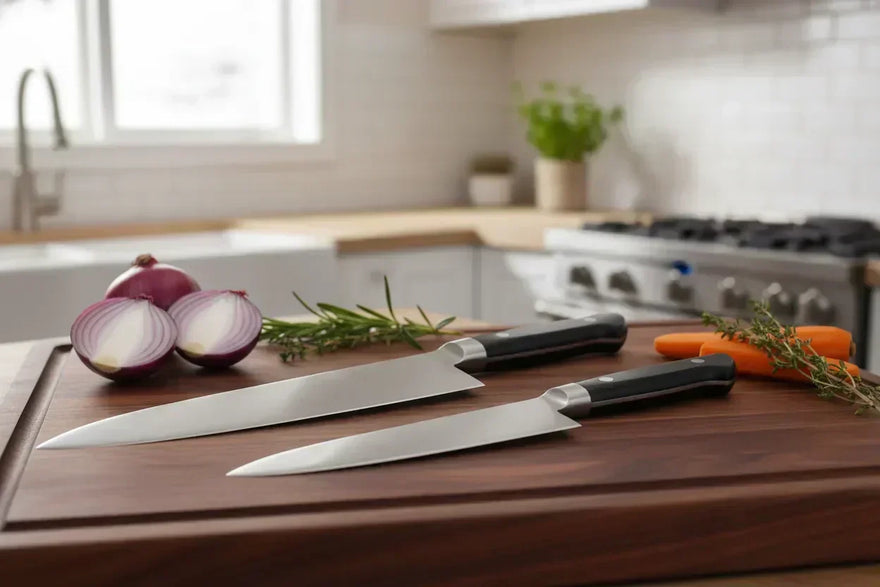
If you are trying to choose the right Gyuto knife size, the decision usually comes down to 210mm or 240mm. Both lengths are core sizes within the Japanese chef's knife category, and both can serve as an all-purpose primary knife. The better choice depends less on abstract preference and more on your cutting habits, board space, ingredient volume, and comfort with blade length. From the perspective of a specialist, this is one of the most important buying decisions because length affects control, rhythm, and long-term satisfaction more than many first-time buyers expect. If you want broader context first, our complete Japanese knife guide explains where gyuto fits within the wider Japanese knife family.
Why Gyuto Length Matters
The gyuto is the Japanese interpretation of the chef's knife, typically built as a double-bevel (ryoba) general-purpose blade for meat, fish, vegetables, and herbs. In practical use, length changes more than reach. It affects balance, tip feel, edge travel through product, and how efficiently the knife moves across the board.
A 210mm gyuto is often the easiest entry point for home cooks because it feels familiar, agile, and manageable in smaller kitchens. A 240mm gyuto usually gives more draw length, more edge contact, and a stronger sense of flow for larger prep. Neither is automatically better. The right size depends on how you cook.
If you are still comparing the basic character of this knife style, our gyuto knife guide covers the blade profile, typical uses, and why gyuto has become the most common recommendation for cooks wanting one primary Japanese knife.
Within authentic Japanese knives, size should always be considered alongside steel, grind, and intended use. A longer blade in very hard steel, such as HRC 62 or above, may feel exceptionally precise but can also demand more disciplined technique. High-hardness knives can be more prone to chipping if twisted in dense produce, used on bone, or scraped roughly across the board.
Gyuto Knife Size Chart: mm to Inches, and What Those Numbers Feel Like
Many buyers search for gyuto size in inches, especially if they are used to Western knives being described as 8-inch, 9-inch, or 10-inch. Japanese knives are usually listed in millimeters because the standard reference is blade length from heel to tip, not the overall knife length including the handle. From a practical standpoint, that measurement is the most useful because it tells you how much cutting edge you have to work with on the board.
Here is the conversion for the most common gyuto lengths. 210mm is about 8.3 inches, 240mm is about 9.4 inches, and 270mm is about 10.6 inches. Consider this, those are helpful approximations, but they are not perfect one-to-one comparisons to "8-inch" or "10-inch" labels because makers vary in edge length, heel height, handle length, and how sharply the tip is drawn out. Two 240mm gyuto can feel different in the hand even if the measured blade length matches.
What many people overlook is what the number feels like in your kitchen. A 210mm often feels comfortable on smaller boards because you can keep more of the knife over the board without bumping the wall, backsplash, or nearby appliances, and tip control stays very immediate. A 240mm usually starts to feel more natural when your board is deeper and your station has clearance in front and behind, since the knife wants a slightly longer stroke and a little more room to reset between cuts. A 270mm can feel excellent on a large board, but in tight home spaces it can feel like the tip and heel are always close to the edge of your working area, which changes your rhythm even if you have the skill to handle the length.
210mm vs 240mm in Real Kitchen Use

The simplest distinction is straightforward. A 210mm gyuto favors maneuverability. A 240mm gyuto favors efficiency and longer cutting strokes. In actual kitchen work, that translates into a few meaningful differences.
210mm gyuto tends to suit home kitchens with limited board depth, smaller ingredient loads, and cooks who value close control at the tip and heel. If you mince shallots, portion boneless proteins, slice smaller cabbage heads, and work in compact spaces, 210mm usually feels natural. It also tends to be easier for cooks transitioning from Western chef's knives in the 8-inch range.
240mm gyuto usually starts to show its strengths when prep volume increases. The extra length helps with slicing larger onions, melons, long carrots, cabbage, and proteins in fewer strokes. Professionals often favor 240mm because the knife keeps a smoother line through product and reduces the need for repeated sawing motions. On the board, that can feel more efficient and less interrupted.
There is also a balance difference. A 210mm gyuto often feels quicker and more centered in the hand. A 240mm can feel more blade-forward, which many experienced users prefer for confident push cutting and slicing. Neither sensation is inherently superior. It is a matter of whether you want compact responsiveness or a longer, more authoritative edge path.
Some buyers also ask about 270mm gyuto. In most cases, 270mm is better reserved for professionals, tall users with large workstations, or those regularly processing substantial ingredient volume. For many home cooks, 270mm is possible but less versatile day to day.
A concrete product example worth considering here is the JCK Original Kagayaki CarboNext Series Gyuto, available in both 210mm and 240mm sizes at $145.00. Built around CarboNext steel — a semi-stainless alloy developed in Seki City — this knife delivers carbon steel-level edge sharpness and retention while being meaningfully easier to maintain than traditional reactive steels like blue steel no. 2. The full tang construction, black pakkawood handles, and double-bevel 70/30 edge grind make it a well-balanced, precise cutter for both daily home prep and more serious cooking. For buyers who want genuine Japanese knife performance without the strict drying and storage routine that fully reactive carbon steel demands, the CarboNext range is a practical and well-regarded starting point.
210mm vs 240mm: Board Size, Cutting Motions, and Food Types
Here's the thing, most people do not choose between 210mm and 240mm in a vacuum. They choose it in a real kitchen with a real cutting board, a wall behind it, and a sink or stove nearby. A 240mm gyuto is not difficult because it is "too advanced," it can be difficult because it asks for space. If your board is shallow or your counter area is tight, the extra length can make your starting position and your reset position feel cramped, which often leads to shorter, choppier strokes than the knife was designed for.
Now, when it comes to cutting motion, a 210mm gyuto often feels more stable for quick, tight work. If you are doing rapid tip work on garlic, scallions, or small herbs, the shorter blade can feel very direct, and it is easier to keep the tip exactly where you want it. A 240mm tends to reward longer push cuts and slicing strokes. Think of it this way, the extra edge length gives you more travel through the ingredient before you run out of knife, which can help you keep a cleaner line in onions, cabbage, and proteins that like a smooth draw. For cooks who use a gentle rock, both sizes can work, but many gyuto profiles are designed to favor push cutting and slicing more than aggressive rocking, so your specific knife profile matters as much as length.
Food type is where the difference becomes obvious. If your prep is mostly smaller items, such as shallots, smaller onions, herbs, and boneless chicken portions, 210mm is rarely limiting. If you routinely cut large onions, dense cabbage, long carrots, melons, or you portion larger proteins and want to do it in fewer strokes, 240mm typically feels more efficient. Where this matters most is high-volume days. If you cook in batches, prep for a family, or do meal prep where you repeat the same cuts many times, 240mm can help your rhythm feel smoother because you are not forced into extra strokes to finish each cut.
The reality is, speed comes from clean technique and a sharp edge, not from swinging a longer knife. A longer blade can support speed by reducing the number of strokes needed on larger ingredients, but it still needs controlled, straight cuts. With very hard Japanese steels, avoid twisting in the cut, avoid prying, and avoid using the edge to scrape the board. That is how you protect a fine edge while keeping your prep fast and consistent.
Pros and Cons

Strengths
- 210mm gyuto usually offers easier control for home cooks, especially on smaller boards and in tighter kitchens.
- 240mm gyuto often provides more efficient slicing and prep rhythm for larger vegetables and proteins.
- Both sizes preserve the versatility that makes gyuto one of the most practical Japanese knife types for general kitchen work.
- Longer edge length can reduce repeated cutting strokes, which may improve consistency in slicing tasks.
- Shorter edge length can feel less intimidating for users moving from Western chef's knives.
- For serious home chefs to professionals who demand high cutting performance, edge retention, and a practical knife, the Kagayaki CarboNext Series Gyuto lets buyers choose length without giving up access to premium carbon steel performance.
Considerations
- 240mm can feel oversized on a small board or in a compact home kitchen.
- 210mm may feel limiting if you regularly prep large produce, longer cuts of meat, or higher volume meals.
- Carbon steel options such as blue steel no. 2 require prompt cleaning and drying to help prevent rust.
- Harder Japanese blades can chip if used with twisting force, bones, frozen food, or rough board contact.
- Knife length preference is personal, so comfort in hand matters as much as theoretical versatility.
Who Each Size Suits Best

A 210mm gyuto generally suits home cooks, apartment kitchens, and anyone who wants a primary knife that feels controlled and adaptable from the first week of use. It is often the safer recommendation for people asking what size gyuto to buy as their first serious Japanese chef's knife.
A 240mm gyuto usually suits experienced home cooks, professionals, and buyers who already know they prefer longer blades. If your prep includes larger produce, frequent protein work, or a faster station pace, 240mm may feel more natural over time.
If your focus is on shopping rather than just comparing sizes, our best gyuto knives reviewed article can help narrow the field further by looking beyond length alone.
Gyuto vs Santoku (and Bunka): If You Are Choosing an All-Purpose Knife, Does Length Still Matter?
Many people arrive at the 210mm vs 240mm question because they want one all-purpose Japanese knife. That is a sensible goal, but it is worth confirming you want a gyuto shape in the first place. A gyuto is built to behave like a Japanese chef's knife with more length, more draw, and a tip that can reach forward for detail work while still offering slicing power through proteins and larger vegetables.
A santoku is usually shorter and often feels taller in the hand for its length, with a profile that favors compact, controlled prep on vegetables and everyday ingredients. If you know you prefer a shorter knife that stays very close to the board and you rarely wish you had more reach, you might stop debating 210mm vs 240mm and simply decide whether a gyuto is the format you want. For most cooks who like a longer slicing stroke, a gyuto remains the more natural all-purpose choice.
A bunka is another popular all-purpose option, often recognized by a more aggressive tip shape. That tip can be extremely useful for precise work, but it can also encourage technique that is not always forgiving if you are rough with the knife, especially with very hard steels. If you tend to work quickly, scrape the board with the edge, or twist in dense ingredients, a gyuto profile can be a calmer, more forgiving daily companion. Consider this, if you want a single knife that covers most tasks and you already enjoy the feel of a chef's knife, choosing the right gyuto length is usually more important than chasing a different shape.
A Product Example Worth Considering
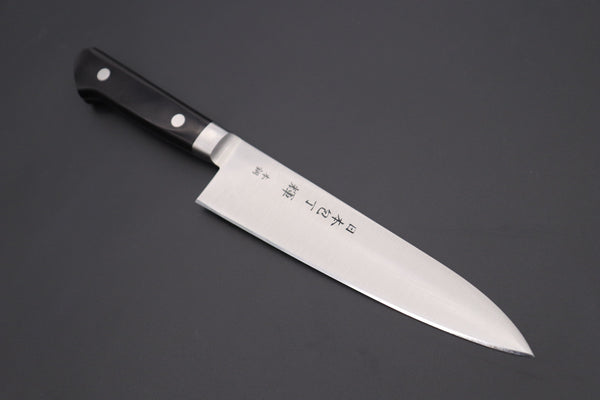
The Kagayaki CarboNext KC-5ES Gyuto is a well-regarded option from Seki City, offered at $145.00 and built around CarboNext steel — a semi-stainless alloy that delivers carbon steel-level edge sharpness and retention while being noticeably more forgiving in daily maintenance than traditional carbon options like blue steel or white steel. In practical terms, this makes it a strong fit for buyers who want fine edge character without committing to the strict drying and oiling routine that fully reactive steels require. The knife uses a full tang construction with black pakkawood handles, a double-bevel 70/30 edge grind, and a standard gyuto profile rather than a kiritsuke variant. For home cooks and serious enthusiasts who want a high-performing, lower-maintenance Japanese knife at a more accessible price point, it is a well-balanced entry into the CarboNext range.
For readers ready to browse authentic Japanese knives, Japanese Chefs Knife is a specialist resource rather than a general kitchenware catalog. The store operates from Seki City and reflects the perspective of Koki Iwahara, bringing valuable context to selection advice. If you are weighing lengths, steels, and makers, visit japanesechefsknife.com to compare gyuto options with the confidence that comes from buying through a Japan-based specialist with worldwide shipping.
How to Choose the Right Gyuto Knife Length

Start with your workspace. A 240mm gyuto needs enough board depth and surrounding clearance to feel comfortable. If your cutting area is narrow or crowded, a 210mm often becomes the more practical daily knife regardless of your skill level.
Next, consider ingredient size and prep volume. If you mostly cook for one to four people and do moderate prep, 210mm is often plenty. If you break down large vegetables regularly, prep family meals in batches, or work on the line, 240mm can be more efficient. The extra edge length becomes noticeable once prep quantity increases.
Then think about technique. Cooks who use shorter, controlled motions often prefer 210mm. Cooks who rely on long push cuts and slicing strokes may prefer 240mm. This is especially true with ingredients that benefit from a continuous draw, where the extra length helps maintain cleaner cuts.
Steel matters as well. Carbon steels such as White steel no. 2 can take a keen edge and are favored by many enthusiasts for sharpening feel and cutting character. They also require commitment. Wipe the blade during prep, wash by hand only, dry thoroughly, and store it carefully. Stainless and stainless-clad options are usually easier for many home users, though the exact tradeoff depends on hardness, grind, and maker.
Finally, be realistic about confidence and habit. Many buyers are drawn to 240mm because it sounds more serious. That is not always the wisest choice. The best gyuto knife length is the one you will use comfortably, sharpen properly, and keep in service for years. For many people, that is 210mm. For others, especially professionals, 240mm becomes the knife that feels complete.
If you are undecided, a useful rule is simple: choose 210mm for versatility in compact kitchens, 240mm for broader prep and stronger flow, and 270mm only if you know your station, technique, and volume truly justify it.
Frequently Asked Questions
Is 210mm or 240mm better for a first gyuto?
For most first-time buyers, 210mm is the easier starting point. It tends to feel familiar, especially if you are coming from an 8-inch Western chef's knife. It offers strong versatility without demanding as much board space or adjustment. A 240mm first gyuto can still work well, but it usually suits buyers who already know they enjoy longer blades.
Do professional chefs usually prefer 240mm gyuto?
In many professional kitchens, 240mm is a common preference because the added edge length supports larger prep volume and cleaner slicing in fewer strokes. That said, station constraints, ingredient focus, and personal technique still matter. Not every professional wants the same blade length, and some line cooks prefer 210mm for tighter work or faster maneuvering.
Is a 270mm gyuto too large for home use?
Not always, but it is often more knife than many home cooks need. A 270mm gyuto can be very effective if you have a large board, generous prep space, and confidence handling longer blades. In smaller kitchens, it may feel cumbersome. Most home users are better served by 210mm or 240mm unless they have a clear reason to go larger.
Does a longer gyuto stay sharper longer?
Not automatically. Edge retention depends more on steel type, heat treatment, hardness, sharpening quality, and how the knife is used. A longer blade may distribute wear across more edge length in some tasks, but that does not guarantee better edge life. Care habits and cutting technique usually matter more than size alone.
What is the difference between gyuto length and gyuto profile?
Length refers to the blade measurement, typically from heel to tip. Profile refers to the blade shape, including belly curve, flat spot, tip height, and how the edge meets the board. Two gyuto of the same length can feel very different if one has more flat edge for push cutting and the other has more curve for rocking.
Are carbon steel gyuto good for home cooks?
They can be excellent for home cooks who are willing to maintain them properly. Carbon steel often offers very fine edge potential and satisfying sharpening response. It also reacts more readily to moisture and acids, so you need to wipe, wash, and dry the knife carefully. If you want lower maintenance, stainless options are often a more forgiving fit.
Should I choose length before steel?
Ideally, choose both together. Length affects handling and workflow, while steel affects maintenance, sharpening behavior, corrosion resistance, and often hardness. If you are uncertain, begin with the role of the knife in your kitchen. Once you know whether 210mm or 240mm fits your prep style, selecting the appropriate steel becomes much easier.
Is a 240mm gyuto harder to sharpen?
It can take a bit more time simply because there is more edge to cover, but the sharpening method is the same. The more important factor is steel type and hardness. Very hard steels, often HRC 62 and above, may reward careful technique but can also expose mistakes more clearly. Consistent angle control matters far more than blade length.
Can one gyuto replace several knives?
A gyuto can cover a very wide range of kitchen tasks, which is why it is often recommended as the first serious Japanese knife. It can slice proteins, prep vegetables, mince herbs, and handle daily general work. It should not be used on bones, frozen foods, or tasks better suited to specialized knives such as deba or bread knives.
How big are gyuto knives?
Common gyuto sizes are 210mm, 240mm, and 270mm, measured from heel to tip. In inches, those are approximately 8.3 inches, 9.4 inches, and 10.6 inches. Gyuto can also be found shorter or longer, but these three sizes are the most widely used for general kitchen work.
Are Japanese knives 15 or 20?
Those numbers are usually referring to centimeters. A 15 cm knife is 150mm, and a 20 cm knife is 200mm. Since common gyuto sizes are listed in millimeters, the closest typical gyuto sizes are 210mm, which is 21 cm, and 240mm, which is 24 cm. That is why you often see 21 cm and 24 cm mentioned as standard gyuto lengths.
What is the difference between 210mm and 240mm gyuto knives?
The difference is 30mm of blade length, which is about 1.2 inches. In use, 210mm tends to feel more agile and easier in tight spaces, while 240mm tends to feel more efficient on larger ingredients because it supports longer slicing strokes. Board space and prep volume usually decide which one feels better in daily work.
How to chop food fast?
Speed comes from consistency, not force. Use a stable cutting board, keep your guiding hand in a safe claw grip, and aim for smooth, repeatable push cuts or slicing strokes rather than short, frantic chopping. A sharp edge is critical, and with hard Japanese knives it is just as important to avoid twisting or prying in the cut, since that can damage the edge and slow you down over time.
Key Takeaways
- 210mm gyuto is often the most practical all-around choice for home cooks and smaller kitchens.
- 240mm gyuto usually rewards cooks who want longer slicing strokes and higher prep efficiency.
- 270mm gyuto is generally best reserved for larger workspaces and more experienced users.
- Steel choice matters alongside length, especially if you are considering high-hardness or carbon steel blades.
- The right gyuto knife size is the one that fits your board space, prep volume, and technique with confidence.
Conclusion
Choosing between 210mm and 240mm is less about prestige and more about fit. A 210mm gyuto usually gives you easier control, simpler storage, and strong daily versatility. A 240mm gyuto often gives you smoother throughput, longer slices, and a more spacious feel on the board. If you cook mostly at home, 210mm is often the safer answer. If you prep in greater volume or already know you prefer longer chef's knives, 240mm may be the better long-term choice. For readers ready to compare authentic Japanese gyuto from a specialist rooted in Seki City, explore the range at japanesechefsknife.com and use that specialist perspective to choose a knife that matches your cooking habits, maintenance preferences, and experience level.
Knife performance can vary based on individual use, care, sharpening skill, cutting surface, and technique. High-carbon steel knives require specific maintenance to help prevent rust or staining, and very hard steels may be more prone to chipping if misused. Always consider your own cooking habits and maintenance commitment before purchasing, and handle sharp knives with appropriate care.


