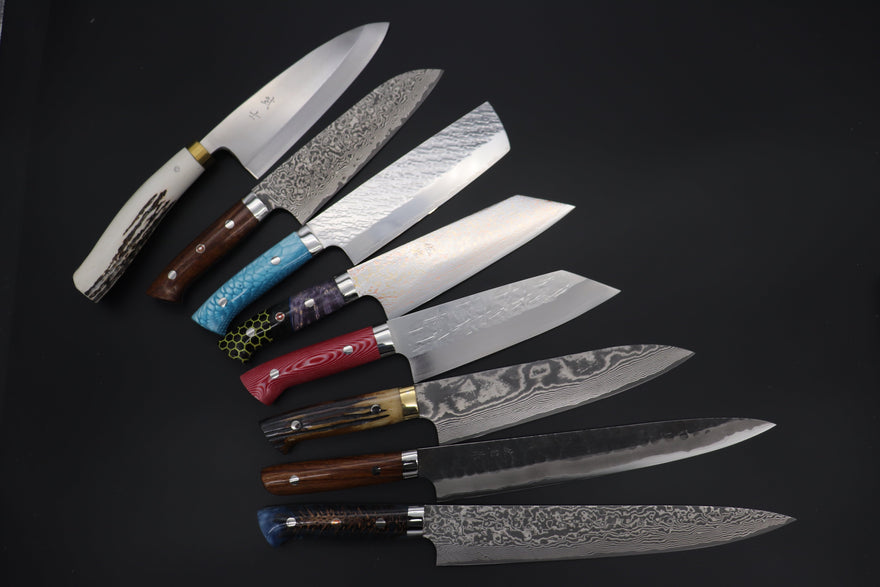
If you love kitchen knives that look amazing and cut like a dream, you need to know about Master Takeshi Saji's work. He has been making incredible knives for over fifty years, and each one feels like holding a piece of art that just happens to slice vegetables perfectly. But here's the thing - picking the right Takeshi Saji knife can get confusing fast:
Steel Selection: Do you want high-carbon steel that gets crazy sharp but needs babying, stainless that's more forgiving, or those fancy new powdered steels?
Handle Materials: Natural stag bone looks wild but needs care, exotic woods feel warm, or modern materials that laugh at water damage
Investment Level: Are you buying a daily driver or something special for your collection?
Maintenance Commitment: Some of these knives want daily attention, others are pretty chill
I've spent way too much time (and money) figuring out Takeshi Saji's different series, so let me break down Takeshi Saji’s six main collections and help you find your perfect match.
A. VG-10 Custom Damascus Wild Series:
Best for a stunning, low-maintenance knife with dramatic visual appeal.
B. R-2 Custom Damascus Wild Series:
Ideal for maximum edge retention and cutting performance with premium handle choices.
C. Aogami Super Kurouchi Series:
Perfect for carbon steel enthusiasts who want ultimate sharpness with rustic character.
D. SRS-13 Custom Series:
Best for those seeking innovative powdered steel with unique texture and modern handling.
E. Gingami No.3 Wa Bocho Series:
Ideal for traditional Japanese knife lovers who prefer stainless steel convenience.
F. SUMMIT Limited Edition Series:
The ultimate choice for collectors wanting exclusive materials and master-level craftsmanship.
Knife Model | Steel Type | Handle Material | Key Feature | Price Range |
VG-10 Stainless | Stag Bone, Linen Micarta | Dramatic wavy Damascus pattern | $210-$430 | |
R-2 Powdered Steel | Ironwood, Stag Bone | Extreme edge retention | $300-$780 | |
Aogami Super Carbon | Ironwood, Linen Micarta | Traditional carbon steel performance | $205-$450 | |
SRS-13 Powdered Steel | Ironwood, Stag Bone, Micarta | Unique mesh texture pattern | $210-$420 | |
Gingami No.3 Stainless | Stag Antler, Bamboo Root | Traditional Japanese single-bevel | $144-$300 | |
R-2, VG-10W Damascus | Exclusive Materials | Collector-grade limited production | $430-$750 |
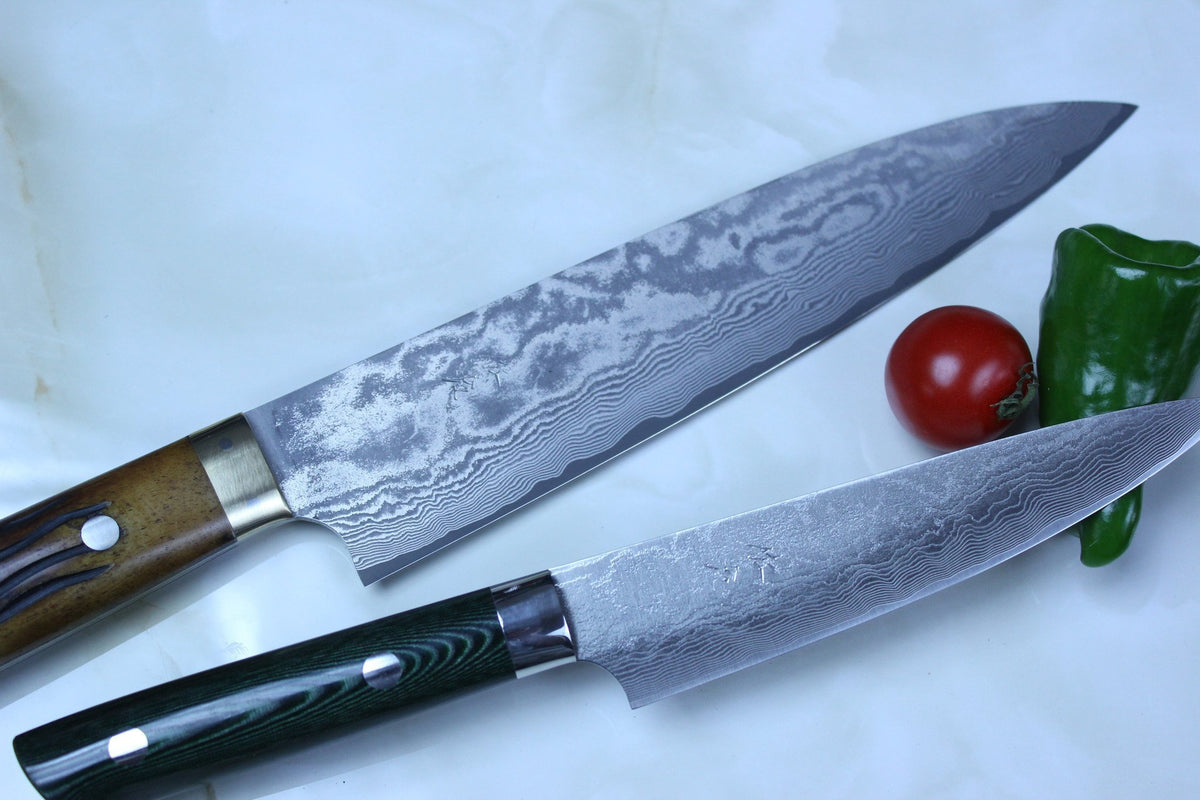
Price: $210 - $430
Specs: VG-10 core steel | HRc 60-62 hardness | Nickel Damascus cladding | Stag Bone handle | Convex (Hamaguri) edge
This is where Saji really shows his wild side. The Damascus patterns look like flowing water or wood grain, and those stag bone handles? Each one is totally unique. It's built on reliable VG-10 steel, so you get that crazy visual appeal without worrying about rust every five minutes.
VG-10 core steel stays sharp longer and won't stain like carbon steel
Traditional Hamaguri (convex) grind lets food slide right off - no more onions sticking to your blade
Multi-layer Nickel Damascus isn't just pretty - it actually makes the blade tougher
Natural Stag Bone handles feel alive in your hand and develop character over time
Hand-forged construction means traditional craftsmanship and spirits that you just can't get from machine-made knives
User Testimonial: "The balance is perfect. It feels aggressive in the hand but moves through food with surprising grace. The Damascus pattern is even more detailed in person."
Pros:
Eye-catching looks that make you want to cook just to use it
A stainless steel core means less babying is required
Convex grind seriously reduces food sticking
Comes in tons of different blade styles
Cons:
Stag bone handles need a bit more care when cleaning
Costs more than regular VG-10 knives (but you're paying for art and a mix of custom handmade & hammer forged knives)
Popular models disappear fast - Saji fans are quick on the trigger
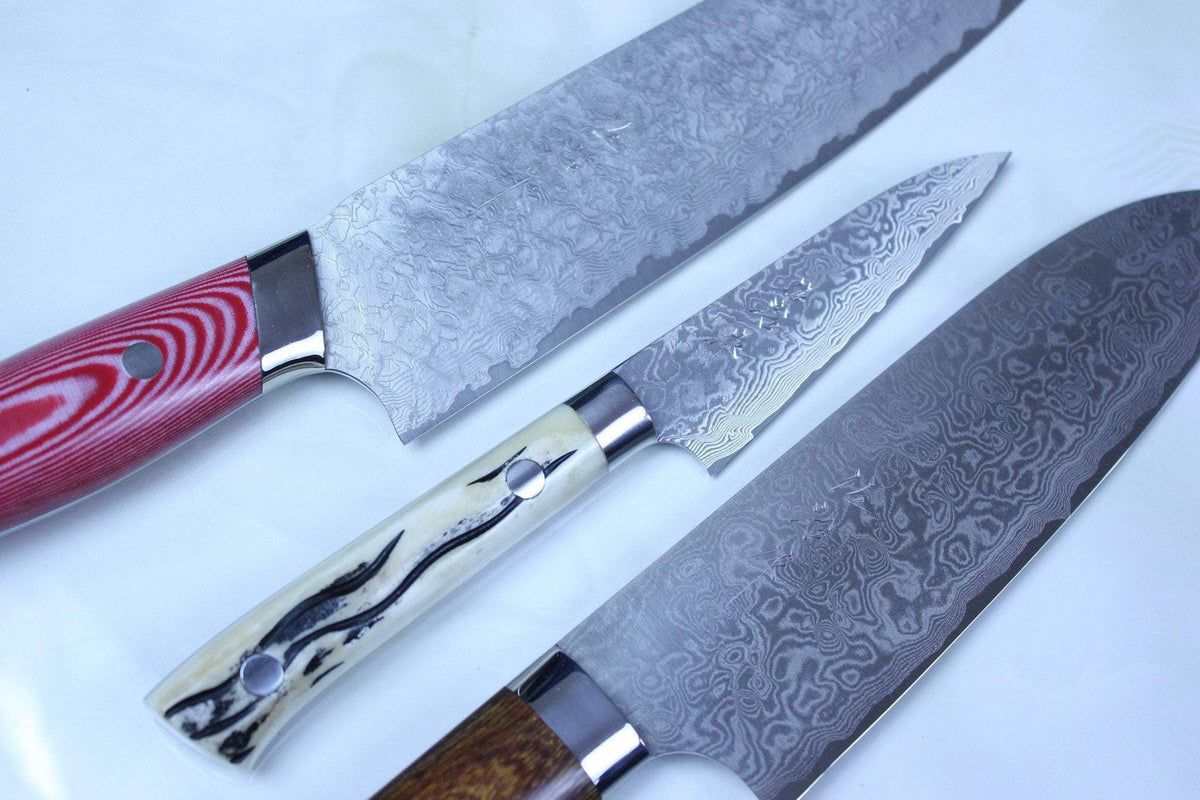
Price: $300 - $780 (special models may vary)
Specs: R-2 powdered high-speed tool steel core | HRc 62-63 hardness | Nickel Damascus cladding | Desert Ironwood or Stag Bone handle | 50/50 double-bevel edge
Here's where Saji takes fifty years of knife-making and throws in some space-age steel. R-2 is powdered metallurgy steel - basically, steel made from metal dust that gets compressed under crazy pressure. The result? Edge retention that'll make you forget what sharpening feels like.
R-2 powdered steel core holds an edge so long you'll think it's magic
Hammer Forged Damascus creates patterns that look different every time you look at them
Two handle choices: Desert Ironwood that feels warm and alive, or Stag Bone that's grippy even when wet
Hard as nails at HRc 62-63 but still tough enough for daily use
50/50 double-bevel works great whether you're left or right-handed
Pros:
Edge retention is insane - R-2 steel stays sharp for weeks of heavy use
Looks that stop conversations - Wild Damascus meets premium handles
Seven different blade styles - From gyutos to nakiris, Takeshi Saji’'s got you covered
Fancy packaging - Comes in a gorgeous Japanese Kiri wood box with red velvet
Works for lefties too - That 50/50 bevel doesn't play favorites
Price reflects the premium - You're paying for top-tier materials and craftsmanship
Still needs TLC - It's tougher than carbon steel but don't throw it in the dishwasher
Limited availability - Good luck finding popular models in stock
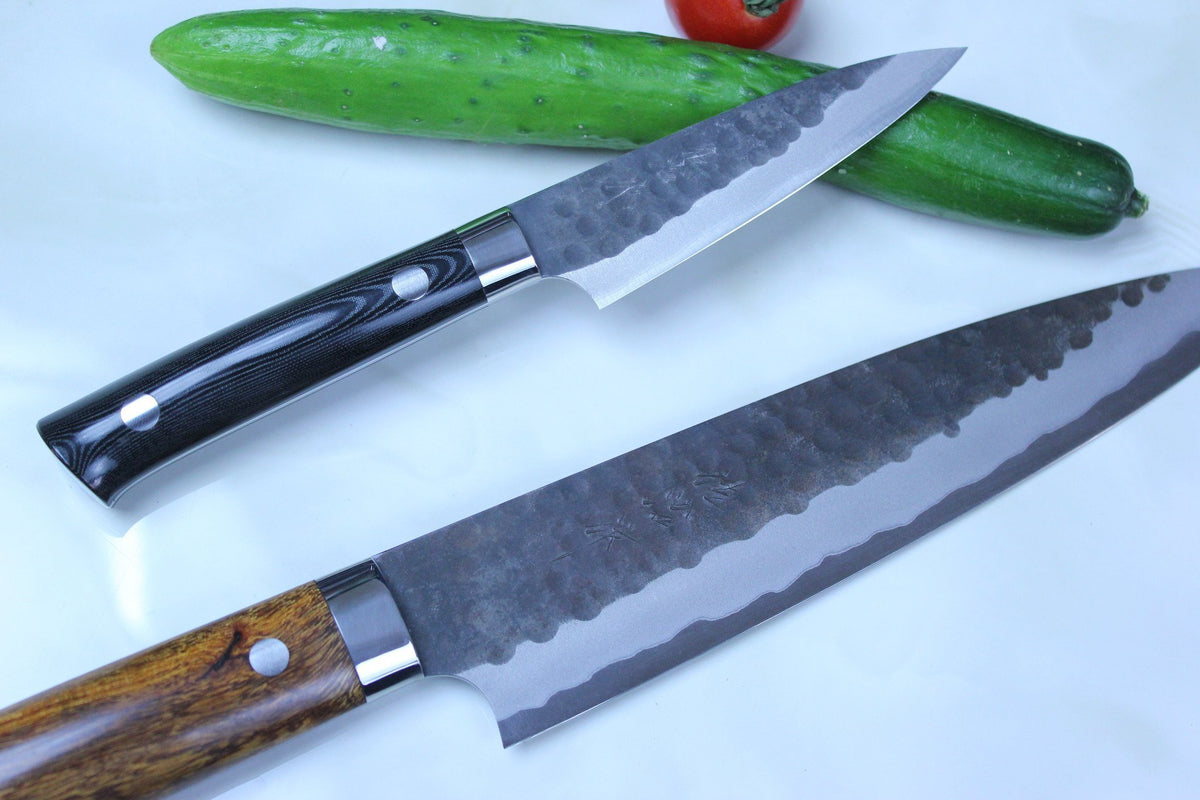
Price: $205-$450
Specs: Hitachi Aogami Super carbon steel core | HRc 63-64 hardness | Stainless steel cladding | Ironwood or Black Linen Micarta handle | Kurouchi finish with Tsuchime pattern
Finally! People kept asking Takeshi Saji for carbon steel knives, and Takeshi Saji delivered with Japan's best carbon steel - Aogami Super. That black kurouchi finish with the hammered texture looks rustic and tough, like something a samurai would appreciate.
Aogami Super (Blue Super) carbon steel gets scary sharp and holds that edge
Rustic black kurouchi finish, combined with hammer marks that actually help food release
Choose between warm, figured Ironwood or bulletproof Black Linen Micarta handles
Stainless steel cladding protects the carbon core, so it's not as fussy as full carbon
Hand-shaped handles with stainless bolsters feel balanced and secure
User Testimonial: "Finally, a carbon steel knife from Takeshi Saji. The sharpness is incredible, and the kurouchi finish gives it great character."
Pros:
Cutting performance that'll spoil you for other knives
Holds an edge forever and sharpens easily when it finally dulls
Two great handle options - pretty wood or practical micarta
Stainless cladding means way less rust paranoia than full carbon
That rustic Japanese look never gets old
Cons:
Carbon steel still needs daily care to stay rust-free
Hand wash only - dishwashers will ruin it
That black finish might wear off with heavy use (some people actually like this)
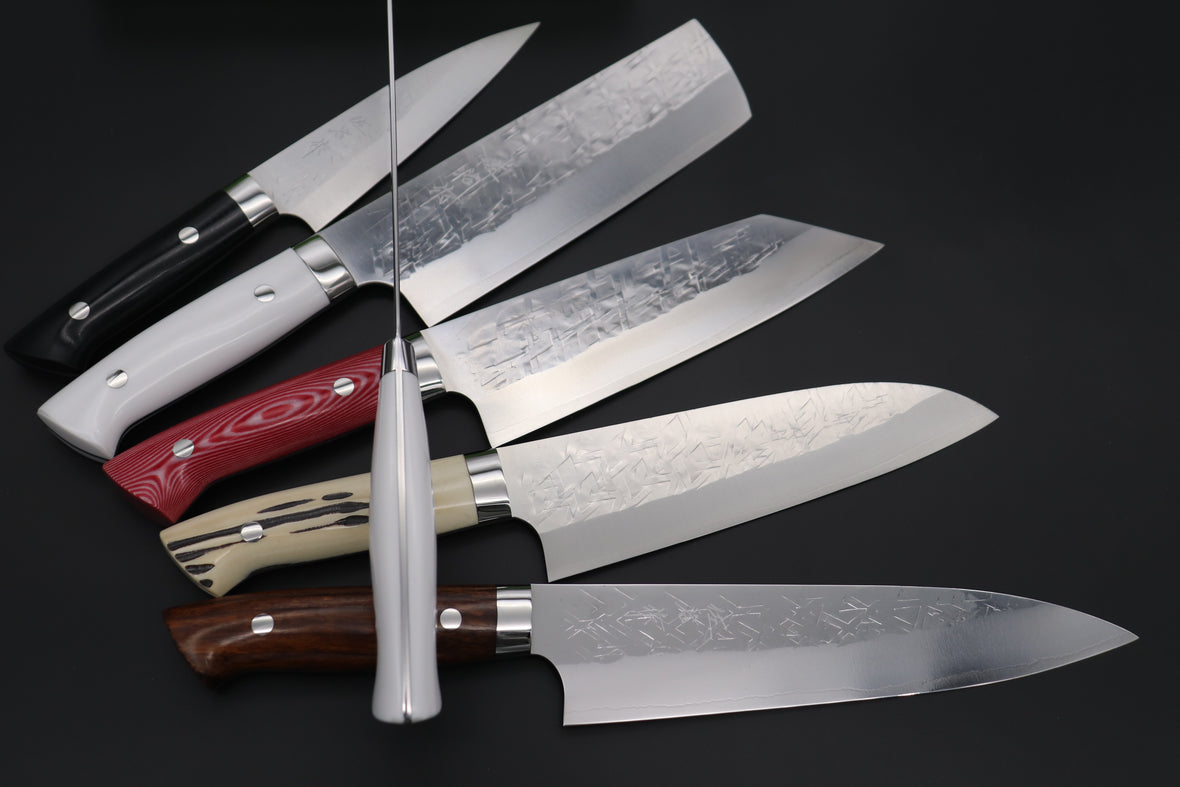
Price: $210 - $420
Specs: SRS-13 powdered high-speed tool steel | Fine microstructure with high carbon content | Unique "mesh" design tsuchime texture | Mirror polish finish | Multiple handle options (Ironwood, Stag Bone, Linen Micarta, White Corian)
Takeshi Saji got his hands on SRS-13 powdered steel and decided to experiment. The result is this mesh-textured series that looks like nothing else out there. That hammered mesh pattern isn't just for show - it actually helps with food release.
SRS-13 powdered steel delivers cutting performance that rivals much more expensive steels
Unique mesh-pattern texture reduces sticking and creates amazing visual contrast
Hand-shaped custom handles that fit your grip perfectly
Mirror polish on the core contrasts beautifully with the textured cladding
Stainless steel bolster adds durability and helps balance the blade
Pros:
Edge retention from premium SRS-13 steel rivals anything out there
That mesh pattern is both functional and unique
Hand-fitted handles show real craftsmanship
More corrosion-resistant than carbon steels
Great balance thanks to that steel bolster
Cons:
Premium materials with custom handmade mean premium pricing

Price: $144-$300
Specs: Hitachi Gingami No.3 (Ginsan) stainless steel | Traditional Japanese wa handles | Stag antler | Single-bevel edges on traditional blades
This is Takeshi Saji paying respect to traditional Japanese knife-making. These wa-style knives with their single bevels are the real deal - topped with a natural stag antler handle.
Gingami No.3 stainless steel gives you carbon steel sharpness without the rust worries
Authentic Japanese single-bevel construction for traditional cutting techniques
Natural stag antler handles provide incredible grip and character
User Testimonial: "This is one of a kind knife. Takeshi Saji is the master of his craftsmanship and this knife shows to prove it."
Pros:
Real traditional Japanese single-bevel construction
Wild stag antler handle
Gingami No.3 steel gets carbon steel sharp but stays stainless steel easy
Traditional wa-style handles for that authentic Japanese cutting experience
Created with blend of Takeshi Saji’s unique idea and craftsmanship
Cons:
Good luck finding one - they sell out immediately
Single-bevel edges need special sharpening knowledge

Price: $430 - $750 (limited edition pricing varies)
Specs: R-2 powdered steel & VG-10W multi-colored Damascus | Limited edition releases | Exclusive handle materials (Spruce Cone, Stabilized Hybrid Woods, Turquoise, Custom Combination, CrazyFiber, ZUMA) | Collector-grade presentation
This is Takeshi Saji showing off. The SUMMIT series is where Takeshi Saji uses the most exotic materials and pushes the skills to the absolute limit. These aren't just knives - they're investment pieces that happen to cut food really, really well and remain as your special collections.
Limited edition releases mean you're getting something truly special
Top-tier steel choices including R-2 powdered steel and multi-colored VG-10W Damascus and New Sensational STRIX Powdered Steel.
Handle materials you won't find anywhere else - some are literally one-of-a-kind
Saji's absolute highest level of fit, finish, and attention to detail
Collector-grade presentation that matches the knife's exclusivity
User Testimonial: "This knife is a work of art. It is lightweight, unbelievably sharp, and even prettier in person. I am very happy with my purchase."
Pros:
True limited edition pieces that become more valuable over time
JCK's most popular Saji series for good reason
Materials and designs you literally can't get anywhere else
Represents the absolute peak of Saji's half-century of experience
Investment value due to limited production and high demand
Cons:
Most models sell out faster than concert tickets
Seasonal releases mean if you miss it, it's probably gone forever
Saji takes traditional Japanese knife-making and cranks up the creativity to 11. While other makers stick to classic designs, Saji experiments with wild Damascus patterns, unusual handle materials, and modern steels. But here's the thing - they're not just pretty. These knives perform as good as they look. Each series has its own personality, but they all share that perfect balance of form and function.
Think about how much knife maintenance you actually want to do:
VG-10, VG-10W & Gingami No.3: Stainless steels - great for beginners, won't rust if you forget to dry them immediately
R-2 & SRS-13: Powdered steels - stay sharp for long and has better rust resistance than carbon steel
Aogami Super: Carbon steel - gets the sharpest but needs daily care to prevent rust
Stag Bone: Every piece is unique, develops character over time, but needs careful cleaning
Ironwood: Gorgeous grain patterns, feels warm in your hand, with good strength and durability
Linen Micarta: Tough as nails, waterproof, stays grippy even when your hands are wet
All knives: Hand-wash and dry the blade and handle with clean cloths. Dishwashers are knife killers.
Carbon steel (Aogami Super): Wipe with a tiny bit of tsubaki oil before storing
Stainless steels (VG-10, Ginsan): Way more forgiving, but still dry them off
Storage: Get wooden sayas or knife guards. Drawer rattling will chip your edge.
Start here:
VG-10 Series - Stainless steel that's reliable and won't break the bank
R-2 Series - Remarkable cutting performance with ease of maintenance
Skip carbon steel until you're comfortable with proper knife care.
Absolutely, and here's why:
They hold their value better than most Japanese knives
The craftsmanship is next level
They perform as amazing as they look
Discontinued series often become collector's gold
Think of them as functional art that'll outlast you with proper care.
Most Saji knives have 50/50 grinds that work perfectly for lefties. But watch out:
Traditional Japanese single-bevel-edge blades in the Gingami No.3 series are right-hand specific
Western-style handles work fine for both hands
Saji's always creating new stuff, and when he does, the old series gets retired. It keeps things fresh but also makes discontinued knives more valuable. If you see something you like that's being phased out, grab it now or regret it later.
SUMMIT is Saji flexing:
Most exotic materials he can get his hands on
Tiny production numbers
Most complex designs
Highest level of finish work
Some pieces are literally one-of-a-kind
It's for serious collectors who want the absolute best of what Saji can do.
Saji's R-2 is fantastic:
Edge retention that competes with steels costing twice as much
Beautiful Damascus patterns that other makers can't match
Easier to sharpen than some super-steels that fight you
Perfect balance of sharpness and durability
It's a sweet spot if you want long-lasting sharpness without extreme maintenance.
Takeshi Saji, now 76 years old, and continues to inspire the next generations. His son-in-law serves as the current president, while his grandson has been honing his craft for over a decade. Together, they proudly carry on the legacy — now known as the Takeshi Saji Team. (Takeshi Saji is both the brand name and the name of its founder.)
A Takeshi Saji knife changes how you think about cooking. Every cut reminds you that you're using something special.
If you're just starting out: Grab the VG-10 Custom Damascus Series. Stainless steel that's forgiving, looks incredible, and costs around $295. Perfect gateway drug to Japanese knives.
If you want the best performance: Go for the R-2 Custom Damascus Series. That powdered steel edge retention is addictive. Budget $300-750 and prepare to be spoiled.
If you love carbon steel: The Aogami Super Kurouchi Series delivers traditional sharpness. Just remember it needs daily attention to stay rust-free.
If you're collecting: The SUMMIT Limited Edition Series is where Saji shows off. Starting at $430 for pieces that'll be heirlooms.
If you want traditional single bevel edge knife: The Gingami No.3 Wa Bocho Series gives you authentic Japanese single-bevel craftsmanship without carbon steel fuss.
A Saji knife isn't just another kitchen tool - it's functional art that makes cooking feel intentional. The weight, balance, and cutting feel are completely different from mass-produced knives.
Start with stainless if you're new to Japanese knives. Yeah, the initial cost stings a bit, but these knives last generations with proper care. Get a Saji specialty knife and pair it with a good workhorse Gyuto, and you'll have everything you need from daily prep to special occasion cooking.
Pick the series that matches how you cook and how much maintenance you actually want to do. Any Saji knife will transform your kitchen experience, but the right one becomes part of your hand.
A practical guide to the best Japanese knife sets at every price point — covering CarboNext semi-stainless, VG-10 Damascus, VG-1 three-knife sets, Misono Sweden steel, and Hattori NOAH premium craftsmanship, with buying tips and common mistakes to avoid.
A deep guide to tamahagane steel and the evolution of Japanese knife steels — from traditional tatara iron sand smelting through White and Blue carbon steels, stainless alloys like VG-10, and modern powdered steels including HAP-40 and ZDP-189.
A detailed comparison of utility knives, paring knives, and Japanese petty knives — covering size, task fit, steel options, technique tips, and five verified product examples from entry to premium.


