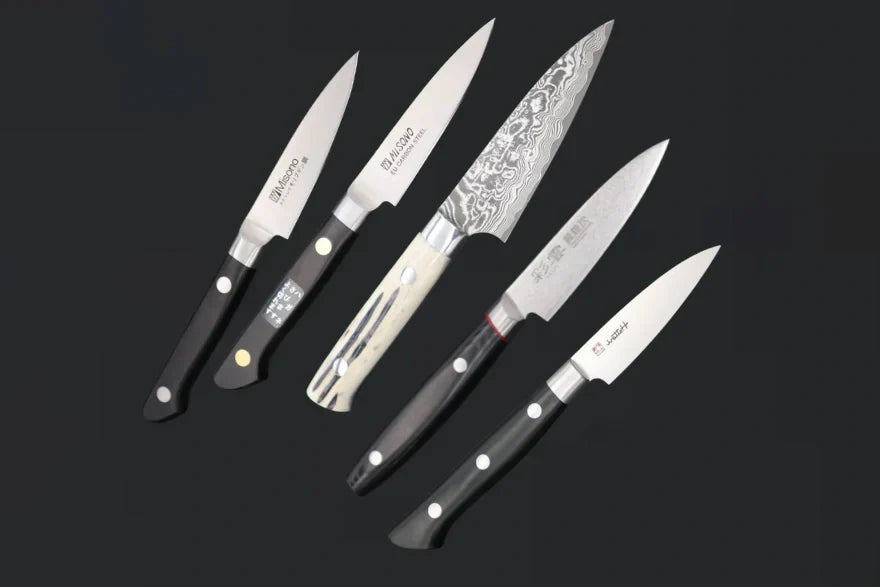
Ever tried peeling an apple with a dull knife? It's frustrating and wasteful. After two decades of selling high quality Japanese Chef knives from top Japanese brands, we've learned that a good paring knife makes all the difference for delicate tasks like peeling fruit, cleaning shrimp, or making garnishes.
Japanese paring knives are special. They're small (usually 2-4 inches), incredibly sharp, and built for holding food in your hand while you work. Unlike chunky Western knives, these are lightweight and give you surgical control.
But here's the problem - there are so many models out there, and most reviews don't tell you which one actually works for your needs and preferences. we've tested dozens of these knives over the years, and we want to share what we've learned.
Each knife maker has own great policy for making process and their experience and knowledges affects very much for the knife's quality and cutting performance. The right paring knife depends on three things: what steel it's made from (affects sharpness and care), the size and balance (for different jobs), and the handle design (for control). Let us break down our top picks and explain why they work.
Knife | Steel Type | Length | Handle | Price |
Misono Molybdenum | AUS-8 Stainless Steel | 80mm | Pakkawood + Stainless Steel Bolster | $77.00 |
Misono Sweden Steel | Swedish Carbon Steel | 80mm | Pakkawood + Stainless Steel Bolster | $91.00 |
Kanetsugu Saiun | VG-10 Damascus Stainless Steel | 90mm | Linen Micarta + Stainless Steel Bolster | $90.00 |
Hattori FH Series | VG-10 Stainless Steel | 70mm | Black Linen Micarta+ Stainless Steel Bolster | $156.00 |
Takeshi Saji R2 | R2 Powdered Steel Damascus Steel | 90mm | Stag Bone + Stainless Steel Bolster | $300.00 |

Price: $77.00
Weight: 59g
Handle: Black Pakkawood with Stainless Steel Bolster
Cutting Edge Length: 80mm
This is our go-to recommendation for most home cooks. The Misono Molybdenum uses AUS-8 steel that stays sharp and doesn't rust easily. It's perfect for everyday tasks like peeling apples, cleaning shrimp, or slicing small vegetables.
Won't rust even if you forget to dry it immediately
The stainless steel bolster (that metal part between blade and handle) makes it incredibly balanced
Sharp enough for delicate work but forgiving if you're learning
Lightweight at 59g - your hand won't get tired
Easy to sharpen when it does get dull
Pros:
Doesn't rust like carbon steel knives
Misono makes a left-handed version (costs a bit more)
Misono’s high quality standard, good made knife for the price
The full tang construction means it'll last for such long time
Rounded spine won't hurt your fingers during long sessions
Good durable and strength, plus ease of re-sharpening
Cons:
Don't use it on bones or frozen food
Needs sharpening more often than premium steels

Weight: 59g
Handle: Black Pakkawood with Stainless Steel Bolster
Cutting Edge Length: 80mm
If you want the sharper Paring knife for the money, this is it. Made from Swedish carbon steel, it gets scary sharp and stays that way. Professional cooks love this one because it holds an edge through heavy use.
Misono’s Swedish carbon steel is well known for sharpness, edge retention and ease of re-sharpening
Misono’s traditional forging process. The balance is perfect for detailed work
Gets sharper than stainless steel knives
Still reasonably priced for what you get
What a professional said: A chef we know switched from German knives after 10 years: "The difference is incredible. This thing holds an edge through 50+ hours of weekly service, and the balance makes garnishing feel effortless."
The pros and cons:
Pros:
High level of sharpness that lasts
Misono also makes Left-handed version and available from our store
Some knife experts call Misono Sweden Steel Series as the best carbon steel knife from Japan
Built to last a lifetime
Amazing quality for the price
Cons:
Needs more care to prevent rust
Don't use on bones or frozen stuff
You must dry and oil it after use

Weight: 74g
Handle: Linen Micarta with Stainless Steel Bolster
Cutting Edge Length: 90mm
This knife is gorgeous and functional. The Damascus steel pattern isn't just for looks - it actually makes strength and durability. The reputable Japanese VG-10 steel core gives you ease of maintenance and convenience with serious sharpness.
33-layer Damascus steel that looks elegant
VG-10 core combines easy care with great sharpness
The Kanetsugu convex edge cuts makes precised and detailed cutting performance
Works great for both right and left-handed people
Linen Micarta handle won't swell or shrink
Customer story: A pastry chef told me: "The Damascus pattern gets compliments every day, but it's the performance that sold me. After many times of using, it still slices paper-thin citrus wheels without bruising the flesh."
Pros:
Stainless steel core means less maintenance
Beautiful Damascus pattern that's functional art
No extra cost for left-handed users
Linen Micarta Handle makes extra durability, strength and secured grip in professional kitchens
Cons:
Bit heavier than other Parers at 74g
Still can't handle bones or frozen foods
Price: $156.00
Handle: Black Linen Micarta with Stainless Steel Bolster
Cutting Edge Length: 70mm
This is the knife for people who do really detailed work. Master bladesmith Ichiro Hattori worked with knife enthusiasts to create the perfect small paring knife. At 70mm, it's tiny but incredibly precise.
VG-10 cobalt steel polished to a semi-mirror finish
Hand-crafted handle that fits your grip perfectly
Ultra-compact size for micro-tasks
Works equally well for right and left-handed users
Limited production means serious quality control
Professional opinion: A Michelin-starred sous chef shared: "In 20 years of cooking, I've never held a parer this precise. It's like the blade follows my thoughts - I've peeled 800 shallots without a single slip or need for sharpening."
Pros:
Unbeatable for detailed tasks like citrus segments
Hand-sharpened and finished blade stays sharp for longer
Design tested and refined by actual chefs
Made by Japan's master bladesmith Hattori
Cons:
Not meant for cutting board work
Still can't handle bones or frozen foods

Weight: 103g
Handle: Stag Bone with Stainless Steel Bolster
Cutting Edge Length: 93mm
This is the knife you buy when you want something special. Master Takeshi Saji has been making knives for over 50 years, and this represents Takeshi Saji’s experience and vision with passion. The R-2 powdered steel gets incredibly sharp and the stag bone handle provides the wild & outdoor spirits.
R-2 powdered steel stays sharp for much longer than the other high quality Japanese steels
Dark Damascus pattern with incredible depth
Hammer Forged and Handcrafted Knife Blade with unique custom handmade handle
Wild and Outdoor taste, Stag bone handle gets more comfortable over time with durability
True 50/50 edge works for everyone
User experience: A pastry chef said: "This isn't just a knife - it's functional art. After 12 months in my kitchen, it still glides through peach skins without touching the flesh and reliable tool. The stag bone develops a unique feel that's like an extension of my hand."
Pros:
Unmatched edge retention from R-2 steel
Collector-quality craftsmanship
Wild and Outdoor taste, Stag bone handle makes strength and durability
Special Unique Knife Collection for your long time cooking partner
Cons:
Bit Heavier than standard parers at 103g
A paring knife is a small, agile blade usually 2-4 inches long. You use it for detailed work while holding food in your hand - like peeling an apple or cleaning a strawberry. Unlike big chef's knives that work on a cutting board, paring knives excel at "in-hand" tasks where you need precise control.
Many professional chefs keep just two main knives in regular rotation — a Gyuto (chef’s knife) for larger work, and a paring knife for precision tasks. When used efficiently together, these two blades can handle the vast majority of cutting jobs in the kitchen.
We can use the paring knife for:
Peeling and trimming: Removing skins from apples or potatoes without wasting flesh
Cleaning: Deveining shrimp or removing strawberry tops
Garnishing: Making citrus twists or carving radish roses
Scoring: Marking pastry dough or making decorative cuts in mushrooms
Of course, that’s not the full list — there are still plenty of other small, detailed cutting tasks where a paring knife shines and works more efficiently than larger blades.
Japanese makers focus on sharpness and control over toughness. Numbers of Japanese knife makers like Hattori and Takeshi Saji use high quality Japanese steels that get much harder than German knives. They sharpen them to incredibly acute angles (12-15 degrees vs 20+ for German knives).
This creates a razor edge that slices through tomato skin or herbs without bruising - something thicker German blades can't do. They're also much lighter (often 50-100g), which makes detailed hand work less tiring.
Paring Knife (2-4 inches): Made for holding food in your hand while you work
Petty Knife (4-6 inches): A small utility knife for cutting board work with small ingredients
Paring knives gives you better control for intricate tasks. Petty knives add reach for light chopping on a board.
Ramsay uses German knives (Wüsthof and Henckels) for heavy work like breaking down chickens. But for precision tasks like garnishing or filleting, he switches to Japanese blades. In his MasterClass, he says: "A sharp paring knife is your scalpel - never compromise on control for delicate tasks."
It depends on what you need:
Starting out: Misono Molybdenum (low maintenance, $67)
Want the sharper: Misono Sweden Steel (holds an edge, $78)
Don't want to baby it: Kanetsugu Saiun (stain resistant, $90)
Do detailed work: Hattori FH Series (ultra-precise, $156)
Want an heirloom: Takeshi Saji R2 Damascus (collector quality, $300)
Daily care:
Hand wash after use - never put it in the dishwasher
Dry completely with a towel (especially crucial for carbon steel)
Store in a knife guard or magnetic strip, not loose in a drawer
Long-term care:
Sharpen on a 1000/3000 grit whetstone when you feel the blade is becoming dull
For the Carbon Steel Knives, please put Tsubaki on carbon steel blades before storing
Never use on bones, frozen food, or hard objects
Absolutely! Most of my recommendations work for lefties:
Universal edges: Kanetsugu, Hattori, and Takeshi Saji work for anyone
Custom left-handed: Misono makes left-handed versions (costs 15% more)
Japanese paring knives turn tedious prep work into something enjoyable. But which one you choose depends on how you cook:
For home cooks: The Misono Molybdenum ($77) balances price and performance perfectly.
For acidic foods: The Misono Molybdenum Steel, Kanetsugu Saiun,, Hattori VG-10 Paring uses steel that won't stain from citrus or tomatoes.
For detailed work: The Hattori FH Series ($156) gives you unmatched control with its tiny 70mm blade.
For collectors: The Takeshi Saji R2 Damascus ($300) delivers heirloom quality and stunning looks.
Whether you're hulling strawberries for your kids or carving garnishes for a dinner party, the right paring knife becomes an extension of your hand. Pick one that feels natural to hold - because when you're doing detailed kitchen work, the smallest blade often makes the biggest difference.
A practical guide to the best Japanese knife sets at every price point — covering CarboNext semi-stainless, VG-10 Damascus, VG-1 three-knife sets, Misono Sweden steel, and Hattori NOAH premium craftsmanship, with buying tips and common mistakes to avoid.
A deep guide to tamahagane steel and the evolution of Japanese knife steels — from traditional tatara iron sand smelting through White and Blue carbon steels, stainless alloys like VG-10, and modern powdered steels including HAP-40 and ZDP-189.
A detailed comparison of utility knives, paring knives, and Japanese petty knives — covering size, task fit, steel options, technique tips, and five verified product examples from entry to premium.


