
Professional chefs constantly search for precision blades that deliver exceptional performance, yet they struggle to compare different models and find the perfect kiritsuke knife. These remarkable Japanese blades combine the slicing power of a yanagiba with the precise cutting of a Usuba, creating a hybrid tool that demands respect and rewards mastery. Working directly with some of the best knife smiths in Japan for over twenty years, We've seen countless chefs struggle with choosing their first kiritsuke. This isn't just another knife purchase—it's a commitment to a different way of cutting, one that demands respect and rewards patience.
We discovered the solution through decades of testing blades in professional kitchens and observing how different kiritsuke designs perform under real-world conditions. Our approach focuses on matching each knife's specific characteristics—whether single-bevel traditional or double-bevel modern—to the chef's skill level, cutting style, and maintenance capabilities. We evaluate every aspect from steel hardness and edge retention to handle ergonomics and long-term durability.
This guide breaks down my current recommendations into clear sections that help you make an informed decision. First, we present our top kiritsuke selections with specific use cases for each model. Next, we provide detailed reviews examining each knife's construction, performance characteristics, and ideal applications. Finally, we include a comprehensive comparison that highlights the key differences between these exceptional blades.
The kiritsuke represents something special in Japanese knife culture. Traditionally, only the head chef carried one, and for good reason. Its long, flat edge and aggressive tip require proper technique, but once mastered, no other knife matches its precision for both vegetable work and protein slicing.
Fu-Rin-Ka-Zan Blue Steel No.2 Hon Kasumi Kiritsuke 240mm - Top choice for traditional performance
Fu-Rin-Ka-Zan Gingami No.3 Hon Kasumi Kiritsuke 240mm - For chefs who need stainless performance
Fu-Rin-Ka-Zan Blue Steel No.1 Suminagashi Kiritsuke 240mm - The collector's choice
Kanetsugu Zuiun Kiritsuke Gyuto 210mm - Best introduction to kiritsuke geometry
Sukenari ZDP-189 Clad Kiritsuke 210mm - For the edge retention obsessed
Model | Blade Steel | Edge Geometry | Length | Hardness (HRC) | Handle | Saya | Price |
Blue No.2 Carbon Steel | Single Bevel | 240mm | 62–63 | Octagonal Magnolia Wood Handle with Water Buffalo Horn Ferrule | Yes | $395 | |
Gingami No.3 Stainless | Single Bevel | 240mm | 62 | Octagonal Magnolia Wood Handle with Water Buffalo Horn Ferrule | Yes | $420 | |
Blue No.1 Suminagashi | Single Bevel | 240mm | 62–63 | Octagonal Ebonywood Handle with Water Buffalo Horn Ferrule | Yes | $730 | |
R-2 Damascus | Double Bevel | 210mm | 62 | Heptagonal Brown Pakka Wood Handle has a Black Pakka Wood Ferrule, a White Spacer and a decorative Mosaic Pin | Yes | $290 | |
VG-10 Stainless | Double Bevel 70/30 | 210mm | 60–61 | Octagonal Ebonywood handle / Buffalo Horn | Yes | $250 | |
ZDP-189 Clad | Double Bevel | 210mm | 65 | Octagonal Carbon Fiber Handle with Composite Turquoise Gemstone Ring and Nickel Silver Spacers | Yes | $480 |

Price: $395.00
Size: 240MM (9.4 inch)
Blade Grind and Edge Shape: Single Bevel Edge
Saya included: Yes
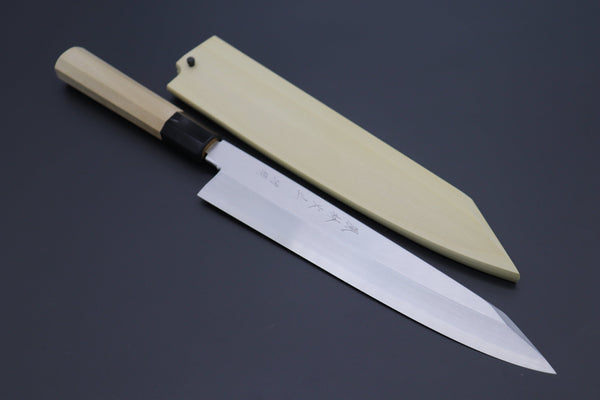
This traditional single-bevel Kiritsuke is hand-forged in Sakai City by master craftsmen. The Blue No.2 steel core delivers a keen edge with excellent edge retention and a satisfying re-sharpening feel. If you value a classic Japanese profile and authentic hand-finished details—like the polished choil and spine—this knife provides uncompromising functionality and beauty.
Highlights:
Hitachi Blue No.2 core
Comfortable octagonal magnolia handle
Includes magnolia wood saya
Price: $420.00
Size: 240mm (9.4 inch)
Blade Grind and Edge Shape: Single Bevel Edge
Saya Included: Yes
For chefs who prefer stainless steel but don’t want to sacrifice cutting feel, Gingami No.3 is a smart compromise. This knife offers the same meticulous craftsmanship as its Hitachi Japanese Carbon Steel sibling but with better corrosion resistance—ideal for busy kitchens or professionals working with acidic ingredients.
Highlights:
Gingami No.3 stainless steel core
Single bevel edge geometry
Same octagonal magnolia handle and matching saya
Price: $730
Size: 240mm (9.4 inch)
Blade Grind and Edge Shape: Single Bevel Edge
Saya included: Yes
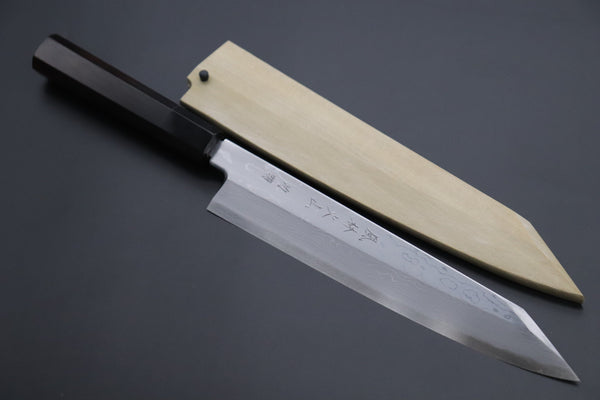
This limited edition knife stands out for its stunning Suminagashi (Damascus) finish. Blue Steel No.1 pushes hardness and edge retention even further, delivering a crisp, refined cut that advanced chefs will appreciate. The ebony handle provides a premium feel in the hand.
Highlights:
Blue Steel No.1 Suminagashi
Hardness up to HRC 63
Octagonal ebony handle
Matching saya included
Price: $290.00
Size: 210mm (8.2 inches)
Blade Grind and Edge Shape: Double Bevel Edge 50/50suitable for both hands
Saya Included: Yes
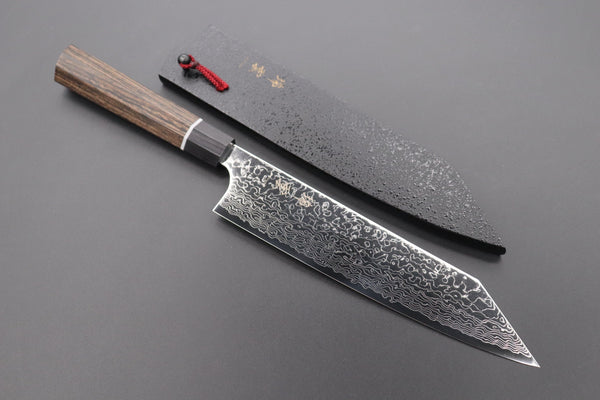
The Zuiun combines R-2 powdered steel with Kanetsugu’s convex grind, producing an incredibly fine edge that stays sharp through long prep sessions. The lighter, double-bevel blade is user-friendly and versatile, perfect for those transitioning from Western knives.
Highlights:
R-2 Nickel Damascus steel
Double bevel edge (50/50)
Heptagonal Pakka wood handle
Stylish black lacquered saya

Price: $250.00
Size: 210mm (8.2 inches)
Sharpness: Regular or Extra sharp
Blade Grind and Edge Shape: Double Bevel Edge 70/30
The Kagayaki VG-10 Kiritsuke is an elegant choice for chefs who want a Japanese blade with excellent corrosion resistance and ease of care. The 70/30 edge provides aggressive cutting action, and the octagonal ebony handle elevates the knife’s presentation and comfort.
Highlights:
VG-10 Mono-Steel
Semi-mirror finish
Double bevel (70/30) edge
Ebony handle with marble buffalo horn ferrule

Price: $480.00
Size: 210mm (8.2 inch)
Blade Grind and Edge Shape: Double Bevel Edge 50/50
Saya Included: Yes
This custom limited edition ZDP-189 knife is handcrafted and designed for the ultimate edge retention and professional and serious users. ZDP-189 reaches HRC 65—among the hardest steels used in kitchen knives—making this blade extraordinary for fine slicing and detail work. The carbon fiber handle with turquoise ring is as unique as the steel itself.
Highlights:
ZDP-189 steel core, HRC 65
Double bevel edge (50/50)
Octagonal carbon fiber handle with decorative ring
Handcrafted magnolia saya
When choosing your Kiritsuke, think carefully about whether you prefer a traditional single-bevel blade (ideal for highly skilled pull-slicing and katsuramuki) or a double-bevel version (more forgiving for Western techniques). Consider your sharpening skills, the steel’s maintenance demands, and the handle geometry that feels most natural to you.
If you’d like, I can help you narrow these options even further or recommend sharpening stones and accessories to complement your selection.
The word kiritsuke (切付) literally means "to cut and attach" or "slit open." This reflects the knife's dual nature—it slices like a yanagiba but precise cuts like a Usuba or chops like Nakiri. In traditional Japanese kitchens, earning the right to use a kiritsuke meant years of mastering other knives first.
The kiritsuke excels at:
Precise protein slicing with minimal waste
Pull-Slicing techniques that preserve cell structure
Detailed garnish work with its sharp tip
Kiritsuke vs. Gyuto: The gyuto rocks; the kiritsuke stays flat. A gyuto's curved belly encourages rocking motion, while a kiritsuke's flatter edge geometry suits push-cutting or chopping techniques. However, if the kiritsuke is a traditional single-bevel design, it is primarily intended for precise pull slicing rather than push or chop cuts. In contrast, double-bevel kiritsuke variants function more like a flat-profile gyuto and can adapt to a wider range of cutting styles.
Kiritsuke vs. Bunka: Both have the distinctive reverse tanto tip, but the Bunka is shorter and more curved. Think of it as a compact kiritsuke for home cooks.
Kiritsuke vs. Yanagiba: The yanagiba is purely for sashimi—long, single-bevel, and delicate. The kiritsuke adds Usuba Knife's capability to similar slicing performance.
Kiritsuke vs. Nakiri: The nakiri is all about vegetables, with a straight edge. The kiritsuke adds a pointed tip for detail work and protein handling.
This choice defines your entire cutting experience:
Single Bevel (Traditional):
Requires proper technique and regular maintenance
Delivers unmatched precision for experienced users
Cuts with less cellular damage
Demands understanding of proper angles and sharpening
Double Bevel (Modern):
More forgiving for Western-trained chefs
Easier to maintain and sharpen
Versatile for various cutting techniques
Better for kitchens with multiple users
Choose single bevel if you're committed to learning proper Japanese technique and have time for maintenance. The precision reward is enormous, but so is the learning curve.
Go double bevel if you need immediate productivity and easier maintenance. You'll still get excellent performance with much less frustration.
For steel, carbon cuts better but demands more care. Stainless is practical but won't quite match carbon's edge quality. High-alloy steels like ZDP-189 offer the best of both worlds at a premium price.
Remember—a kiritsuke isn't just another knife. It's a commitment to precision, technique, and respect for ingredients. Choose thoughtfully, and it will serve you for decades.
The smiths we work with take pride in every blade that leaves their forge. When you invest in one of these knives, you're not just buying steel—you're connecting with centuries of Japanese craftsmanship and a tradition that values perfection over convenience.
Questions about steel types, sharpening, or finding the right fit for your kitchen? We are here to help you make the right choice.
Fu-Rin-Ka-Zan Blue Steel No.2 Hon Kasumi Kiritsuke 240mm - Top choice for traditional performance
Fu-Rin-Ka-Zan Gingami No.3 Hon Kasumi Kiritsuke 240mm - For chefs who need stainless performance
Fu-Rin-Ka-Zan Blue Steel No.1 Suminagashi Kiritsuke 240mm The collector's choice
Kanetsugu Zuiun Kiritsuke Gyuto 210mm Best introduction to kiritsuke geometry
Sukenari ZDP-189 Clad Kiritsuke 210mm For the edge retention obsessed
Model | Blade Steel | Edge Geometry | Length | Hardness (HRC) | Handle | Price |
Blue No.2 Carbon Steel | Single Bevel | 240mm | 62–63 | Magnolia / Buffalo Horn | $395 | |
Gingami No.3 Stainless | Single Bevel | 240mm | 62 | Magnolia / Buffalo Horn | $420 | |
Blue No.1 Suminagashi | Single Bevel | 240mm | 62–63 | Ebony / Buffalo Horn | $730 | |
R-2 Damascus | Double Bevel | 210mm | 62 | Pakka Wood | $290 | |
VG-10 Stainless | Double Bevel 70/30 | 210mm | 60–61 | Ebony / Buffalo Horn | $250 | |
ZDP-189 Clad | Double Bevel | 210mm | 65 | Carbon Fiber / Gemstone | $480 |
A practical guide to the best Japanese knife sets at every price point — covering CarboNext semi-stainless, VG-10 Damascus, VG-1 three-knife sets, Misono Sweden steel, and Hattori NOAH premium craftsmanship, with buying tips and common mistakes to avoid.
A deep guide to tamahagane steel and the evolution of Japanese knife steels — from traditional tatara iron sand smelting through White and Blue carbon steels, stainless alloys like VG-10, and modern powdered steels including HAP-40 and ZDP-189.
A detailed comparison of utility knives, paring knives, and Japanese petty knives — covering size, task fit, steel options, technique tips, and five verified product examples from entry to premium.


