
When I first came across Usuba knives, I dismissed them as just another elegant Japanese blade—beautiful, yes, but perhaps not essential. I couldn’t have been more mistaken.
After years of wrestling with a standard chef’s knife, trying to achieve perfectly even, paper-thin cucumber slices, I finally invested in my first Usuba. The transformation was immediate. What used to be a maddening struggle with daikon katsuramuki peeling suddenly felt effortless—smooth, precise, and even meditative.
A Usuba is not a generalist’s knife. It is a specialist, crafted with a single-bevel edge for exacting vegetable work. If you’re serious about precision and artistry in your cuts, nothing compares. This blade doesn’t just slice—it elevates your technique.
Usuba comes in three primary styles, and choosing the wrong one for your work is easier than you might think.
Think of this as the straight-edged workhorse. The blade looks plain and flat, but the moment it meets a daikon radish, it proves just how impressive it really is. I use mine mostly for thin-slicing vegetables, and when I need those perfect matchstick cuts that actually look uniform.
This is where the design truly reveals its genius. The tip curves subtly, almost like a miniature sickle, making it ideal for peeling round vegetables. I discovered this through experience with a standard Usuba; I finally reached for the curved style. The difference was remarkable: the blade’s tip seemed to glide along the fruit’s natural contours, turning a once-frustrating task into a fluid, effortless motion.
The most delicate, precision-oriented blade in the Usuba family.. Exceptionally thin—often less than 3mm—it glides through vegetables with the precision of a scalpel. When it comes to intricate garnishes, such as the delicate radish flowers you’ll find adorning plates in fine Japanese restaurants, this is the tool that makes such artistry possible.
1. Fu-Rin-Ka-Zan Blue #2 (180mm) - Carbon steel precision
2. Masamoto KS White #2 (180mm) - Legendary Masamoto Quality
3. Mizuno Tanrenjo Blue #1 (180mm) - Heavy-duty edge retention
4. Fu-Rin-Ka-Zan Gingami #3 (180mm) - Stainless steel alternative
5. Fu-Rin-Ka-Zan Blue #2 (180mm) - Carbon curved tip
6. Fu-Rin-Ka-Zan Gingami #3 (180mm) - Stainless curved tip
7. Fu-Rin-Ka-Zan Blue #2 (180mm) - Carbon decorative specialist
8. Masamoto KS White #2 (180mm) - Artisan garnishing
9. Fu-Rin-Ka-Zan Gingami #3 (180mm) - Stainless detail work
Knife Model | Steel Type | Length | Handle Material | Price |
Fu-Rin-Ka-Zan Blue #2 Hon Kasumi Usuba | Blue Steel No.2 (Carbon) | 180mm | Octagonal Magnolia + Water Buffalo Horn | $280 |
Masamoto KS White #2 Usuba | White Steel No.2 (Carbon) | 180mm | D-Shaped Magnolia + Water Buffalo Horn | $420 |
Mizuno Tanrenjo Ao Hagane DX Usuba | Blue Steel No.1 (Carbon) | 180mm | D-Shaped Magnolia + Water Buffalo Horn | $540 |
Fu-Rin-Ka-Zan Gingami #3 Usuba | Gingami No.3 (Stainless) | 180mm | Octagonal Magnolia + Water Buffalo Horn | $320 |
Fu-Rin-Ka-Zan Blue #2 Kama Usuba | Blue Steel No.2 (Carbon) | 180mm | Octagonal Magnolia + Water Buffalo Horn | $280 |
Fu-Rin-Ka-Zan Gingami #3 Kama Usuba | Gingami No.3 (Stainless) | 180mm | Octagonal Magnolia + Water Buffalo Horn | $320 |
Fu-Rin-Ka-Zan Blue #2 Mukimono | Blue Steel No.2 (Carbon) | 180mm | Octagonal Magnolia + Water Buffalo Horn | $300 |
Masamoto KS White #2 Mukimono | White Steel No.2 (Carbon) | 180mm | D-Shaped Magnolia + Water Buffalo Horn | $440 |
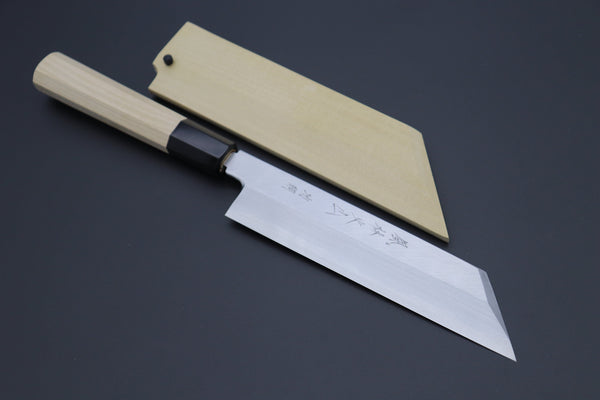
Price: $300.00
Weight: 136g
Handle: Octagonal Magnolia Wood with Water Buffalo Horn Ferrule
Cutting Edge Length: 170mm
This knife specializes in Japanese decorative cutting (mukimono). Hand-forged in Sakai from Blue Steel No.2 (HRc 62-63), its single-bevel edge creates razor-thin vegetable garnishes and fruit carvings. The magnolia handle and included wooden saya provide balance and protection for detailed work.
Blue Steel No.2 core holds exceptional sharpness
Hand-polished spine/choil for comfortable grip
Single-bevel design enables paper-thin precision cuts
Magnolia saya protects the edge during storage
Pros:
Ideal for intricate garnishing
Saya included
Forged by top Sakai artisans
Cons:
Requires oiling to prevent rust
Not for bones/hard foods
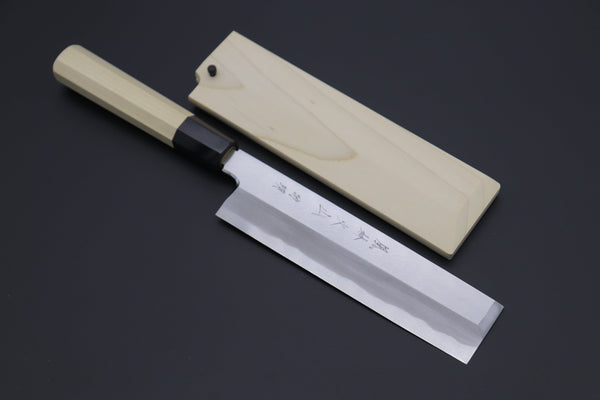
Price: $280.00
Weight: 194g
Handle: Octagonal Magnolia Wood with Water Buffalo Horn Ferrule
Cutting Edge Length: 165mm
This traditional Usuba excels at precision vegetable work. Hand-forged in Sakai from Blue Steel No.2 (HRc 62-63), its single-bevel blade creates clean cuts that minimize oxidation in raw produce. The 3.6mm thick blade handles katsuramuki (rotary peeling) and thin slicing with control.
Blue Steel No.2 core: superior edge retention for high-volume prep
Hand-finished spine/choil: comfortable grip during prolonged use
Single-bevel design: enables paper-thin cuts without bruising produce
Magnolia saya included: protects edge during storage
Pros:
Perfect for katsuramuki and sengiri techniques
Saya protects the razor-sharp edge
Competitive price for Sakai craftsmanship
Cons:
Demands frequent oiling (carbon steel)
Not for dense/hard ingredients
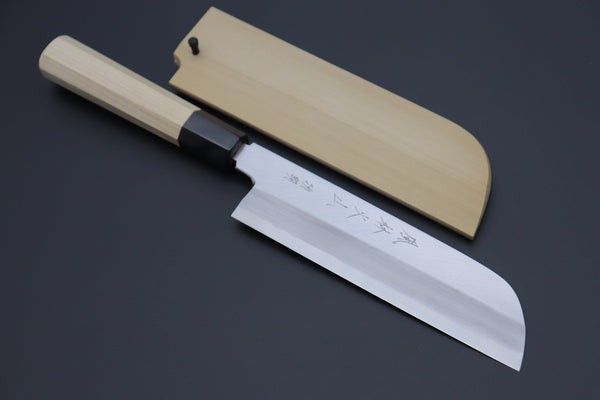
Price: $280.00
Weight: 182g
Handle: Octagonal Magnolia Wood with Water Buffalo Horn Ferrule
Cutting Edge Length: 165mm
This Kansai-style Usuba features a curved "sickle" tip for agile vegetable work. Hand-forged from Blue Steel No.2 (HRc 62-63), its single-bevel blade excels at precision peeling and decorative cuts. The 3.8mm thick blade balances control and durability for intricate tasks.
Curved tip contours round vegetables like turnips/apples
Blue Steel No.2 core maintains razor sharpness
Hand-finished spine/choil: reduces fatigue during long prep
Single-bevel edge: enables flawless katsuramuki technique
Magnolia saya included: protects the edge
Pros:
Versatile curved tip outperforms flat blades
Saya protects sharp edge
Authentic Sakai craftsmanship
Cons:
Requires daily oiling (carbon steel)
Not for hard/bony ingredients
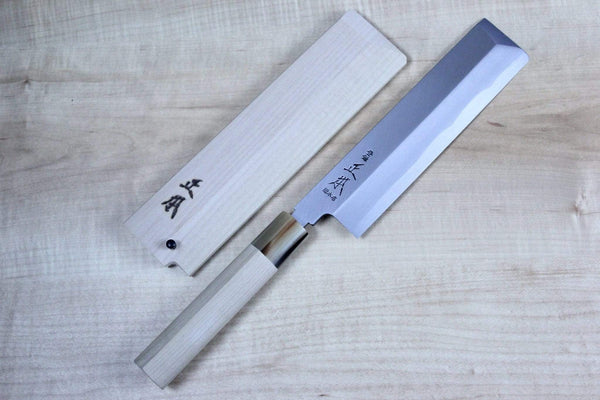
Price: $420.00
Weight: 200g
Handle: D-Shaped Magnolia Wood with Water Buffalo Horn Ferrule
Cutting Edge Length: 180mm
This Usuba sets the standard for traditional vegetable preparation. Handcrafted from White Steel No.2 (HRc 62-63), its single-bevel blade delivers unmatched sharpness for katsuramuki and fine slicing. The 4mm-thick blade balances precision and durability.
White Steel No.2 core: exceptional sharpness with easier sharpening than blue steel
Hon-kasumi construction: the selected Masamoto experienced craftsmen are involved for handcrafting the Hon-Kasumi Finished blade
D-shaped handle: ergonomic grip for rotary peeling techniques
Magnolia saya included: protects the razor edge
Pros:
Industry-leading sharpness for precision work
Saya is included for safe storage
Available in 4 sizes (180mm/195mm/210mm/225mm)
Cons:
Demands meticulous carbon steel maintenance
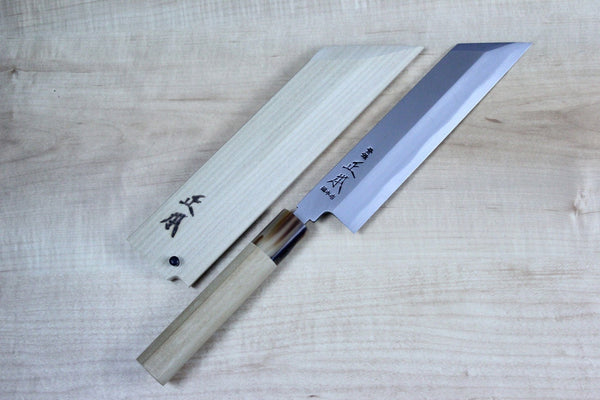
Price: $440.00
Weight: 136g
Handle: D-Shaped Magnolia Wood with Water Buffalo Horn Ferrule
Cutting Edge Length: 180mm
This specialized knife excels in decorative vegetable carving (mukimono). Handcrafted from White Steel No.2 (HRc 62-63), its thin 3mm blade creates intricate garnishes with surgical precision. The d-shaped handle offers control for delicate work.
White Steel No.2 core: superior sharpness for detailed cuts
Hon-kasumi construction: the selected Masamoto experienced craftsmen are involved for handcrafting the Hon-Kasumi Finished blade
Thinner blade (3mm): ideal for intricate carving
Magnolia saya included: protects the razor edge
Pros:
Unmatched precision for intricate designs
Saya is included for storage
Available in 180mm/210mm sizes
Cons:
Left-handed version: +50% cost, potential long wait
Carbon steel requires daily maintenance
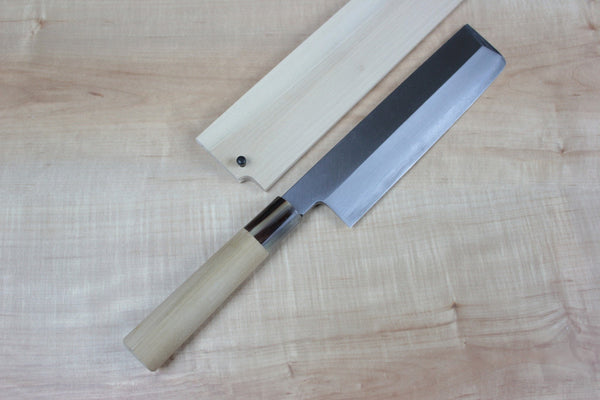
Price: $420.00
Weight: 138g
Handle: D-Shaped Magnolia Wood with Water Buffalo Horn Ferrule
Cutting Edge Length: 180mm
Mizuno's flagship usuba uses Blue Steel No.1 for unparalleled sharpness in vegetable preparation. The blade minimizes cell damage in raw produce, ideal for katsuramuki daikon and fine slicing. Hand-sharpened and finished for balance in professional use.
Blue Steel No.1 core: Highest carbon content (1.3-1.4%) for extreme edge retention
Tungsten-chromium alloy: Forms hard carbides rivaling honyaki performance
Hand-forged construction: Deep History of Traditional methods by master craftsmen
D-shaped handle: Ergonomic grip for rotary peeling techniques
Saya included: Magnolia wood sheath protects the edge
Pros:
Unbeatable edge retention (tungsten/carbide enhanced)
Saya protects razor-sharp edge
Available in 6 sizes (165mm-240mm)
Crafted by Japan's top traditional forge
Cons:
High-maintenance carbon steel
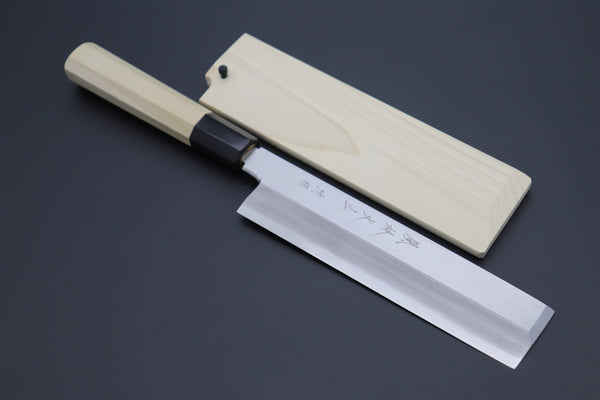
Price: $320.00
Weight: 194g
Handle: Octagonal Magnolia Wood with Water Buffalo Horn Ferrule
Cutting Edge Length: 165mm
A stainless steel solution for traditional usuba tasks. The Gingami No.3 core resists stains while maintaining HRc 62 hardness, ideal for raw vegetable prep where oxidation affects flavor. Hand-Sharpened and finished for seamless ingredient release.
Gingami No.3 stainless steel: Corrosion-resistant while matching carbon steel sharpness
Single-bevel edge: Precision cutting for katsuramuki techniques
Thicker spine (3.6mm): Stability for thin slicing without flex
Saya included: Magnolia wood sheath protects the edge
Pros:
Stain-resistant for low-maintenance use
Wide 46mm blade stabilizes produce
Saya protects sharp edge during storage
Cons:
Higher price than carbon steel counterparts
Not for bones/frozen foods
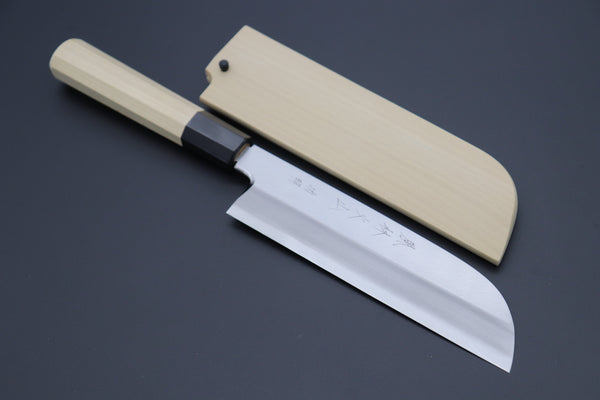
Price: $320.00
Weight: 170g
Handle: Octagonal Magnolia Wood with Water Buffalo Horn Ferrule
Cutting Edge Length: 170mm
A stainless steel solution for Kansai-style vegetable prep. The curved tip follows contours of produce during peeling or garnishing, while resisting stains from acidic ingredients. Ideal for komurasaki techniques in humid kitchens.
User Note: "Peeled 50 lbs of baby potatoes without rust spots – the curve reduces wrist strain."
Gingami No.3 stainless: Corrosion-resistant with HRc 62 sharpness
Curved "sickle" tip: Agile peeling for round vegetables (apples, turnips)
Hand-forged in Sakai:
Suitable Blade thickness: Stability for intricate decorative work
Saya included: Magnolia wood sheath protects edge
Pros:
No rust worries (stainless steel)
Curved tip outperforms flat blades for round produce
Saya protects edge during storage
Lower maintenance than carbon steel
Cons:
Not for bones/frozen foods
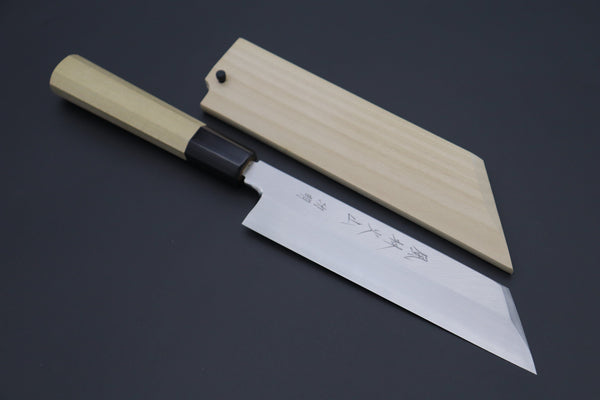
Price: $340.00
Weight: 125g
Handle: Octagonal Magnolia Wood with Water Buffalo Horn Ferrule
Cutting Edge Length: 170mm
Specialized for Japanese decorative garnishing, this knife’s thin, 170mm blade and "reverse tanto" tip glide through delicate ingredients without crushing cells. Ideal for intricate vegetable art or precise fruit peeling.
Gingami No.3 stainless steel: Combines corrosion resistance with carbon-steel-level sharpness (HRc 62).
Ultra-thin blade (2.8mm): Optimized for intricate decorative cuts like kazari-giri (vegetable carving).
Single-bevel edge: Enables surgical precision for mukimono techniques like radish roses or citrus garnishes.
Saya included: Magnolia wood sheath protects the edge during storage.
Pros:
Stain-resistant steel handles acidic ingredients (e.g., citrus, tomatoes).
Lightweight (125g) for nimble control during detailed work.
Saya protects the razor edge.
Superior to thicker blades for mukimono artistry.
Cons:
Not for hard foods (bones, frozen items) due to thin blades.
Single-bevel design requires technique mastery to avoid "steering".
An Usuba is a single-bevel knife made for vegetables. The flat blade gives incredibly clean cuts - way better than regular knives. They're typically 180mm long and 3-4mm thick.
Katsuramuki - peeling daikon into paper-thin sheets
Sengiri - cutting perfect matchstick vegetables
Mukimono - creating decorative garnishes
Precision slicing - Uniform cucumber or carrot slices that are actually translucent Peeling round vegetables - Kama Usuba's curved tip handles apples and turnips perfectly Decorative work - Those radish flowers from sushi restaurants are easier than you think Herbs and greens - Clean cuts without crushing or blackening edges
Don't use it on bones, frozen foods, or hard squash. The thin blade will chip.
Three key differences:
Single-bevel edge - Only sharpened on one side, giving cleaner cuts than any double-bevel knife
Harder steel - Blue #1 or White #2 carbon steel holds edges longer but needs more care
Specialized shapes - Flat blades for control, curved tips for round produce
Usuba:
Single-bevel edge
For precision cuts
Requires skill
Nakiri:
Double-bevel edge
For everyday chopping
Beginner-friendly
Start with a Nakiri if you're new to Japanese knives for vegetables
Starting out: Fu-Rin-Ka-Zan Gingami #3 ($280) - stainless steel, low maintenance Want sharpness: Masamoto KS White #2 ($420) - carbon steel that gets incredibly sharp Detailed garnishes: Fu-Rin-Ka-Zan Mukimono ($240) - thin blade for decorative work Professional use: Mizuno Blue #1 ($540) - extreme edge retention
Daily: Hand wash and dry immediately (carbon steel rusts fast)
Storage: Use the included wooden saya - never toss in a drawer
Carbon steel: Wipe with tsubaki oil before storing
Yes, but options are limited:
Left-hand models: - cost 50% more
Most carbon steel brands don't make left-handed versions
Alternative: Double-bevel Nakiri knives work for everyone
Usuba knives turn vegetable prep into precision work instead of just hacking away.
Home cooks: Fu-Rin-Ka-Zan Gingami #3 Mukimono ($340) - stainless steel, handles many tasks
Professional kitchens: Masamoto KS White #2 Usuba ($420) - unbeatable sharpness for volume work
Decorative work: Fu-Rin-Ka-Zan Blue #2 Mukimono ($300) - thin blade perfect for garnishes
Budget-conscious: Fu-Rin-Ka-Zan Blue #2 Traditional ($280) - carbon steel performance, just oil it daily
A Usuba isn't an everyday knife - it's a specialist tool for precision work.
Start with stainless steel if you're new to this. The clean cuts preserve flavor and texture better than crushed edges from duller blades. Pair it with a Gyuto or Santoku for other tasks, and you'll have a setup that handles whatever you throw at it.
A practical guide to the best Japanese knife sets at every price point — covering CarboNext semi-stainless, VG-10 Damascus, VG-1 three-knife sets, Misono Sweden steel, and Hattori NOAH premium craftsmanship, with buying tips and common mistakes to avoid.
A deep guide to tamahagane steel and the evolution of Japanese knife steels — from traditional tatara iron sand smelting through White and Blue carbon steels, stainless alloys like VG-10, and modern powdered steels including HAP-40 and ZDP-189.
A detailed comparison of utility knives, paring knives, and Japanese petty knives — covering size, task fit, steel options, technique tips, and five verified product examples from entry to premium.


